When people talk about power dressing, they usually mean blazers, shoulder pads, and a certain stiffness that's supposed to signal authority. But a saree can do the same job - arguably a more interesting one - without borrowing a single element from a Western suit. It doesn't need padded shoulders to command a room. It needs the right fabric, the right color, a deliberate drape, and someone who knows how to wear it like she means it.
This isn't about making a saree "corporate." It's about understanding what actually reads as authoritative in six yards of fabric, and building toward that on purpose.
What power dressing means when it's a saree
Power dressing has never really been about the specific garment - it's about control. A blazer projects control through structure. A saree projects it differently: through posture, through the precision of the drape, through the confidence of someone who isn't fidgeting with her pallu every five minutes. The fabric holds a shape, the pleats hold a line, and the person wearing it holds the room.
The goal isn't to look stiff or unapproachable. It's to look like every part of the outfit was a decision, not an accident.

Fabric is where structure begins
A power saree needs body. Soft, flowy fabrics like chiffon or georgette are beautiful, but they drape in a way that reads as gentle rather than commanding — they move with every breath of air, which is lovely for an evening but not what you want walking into a boardroom.
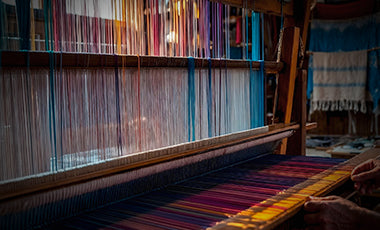
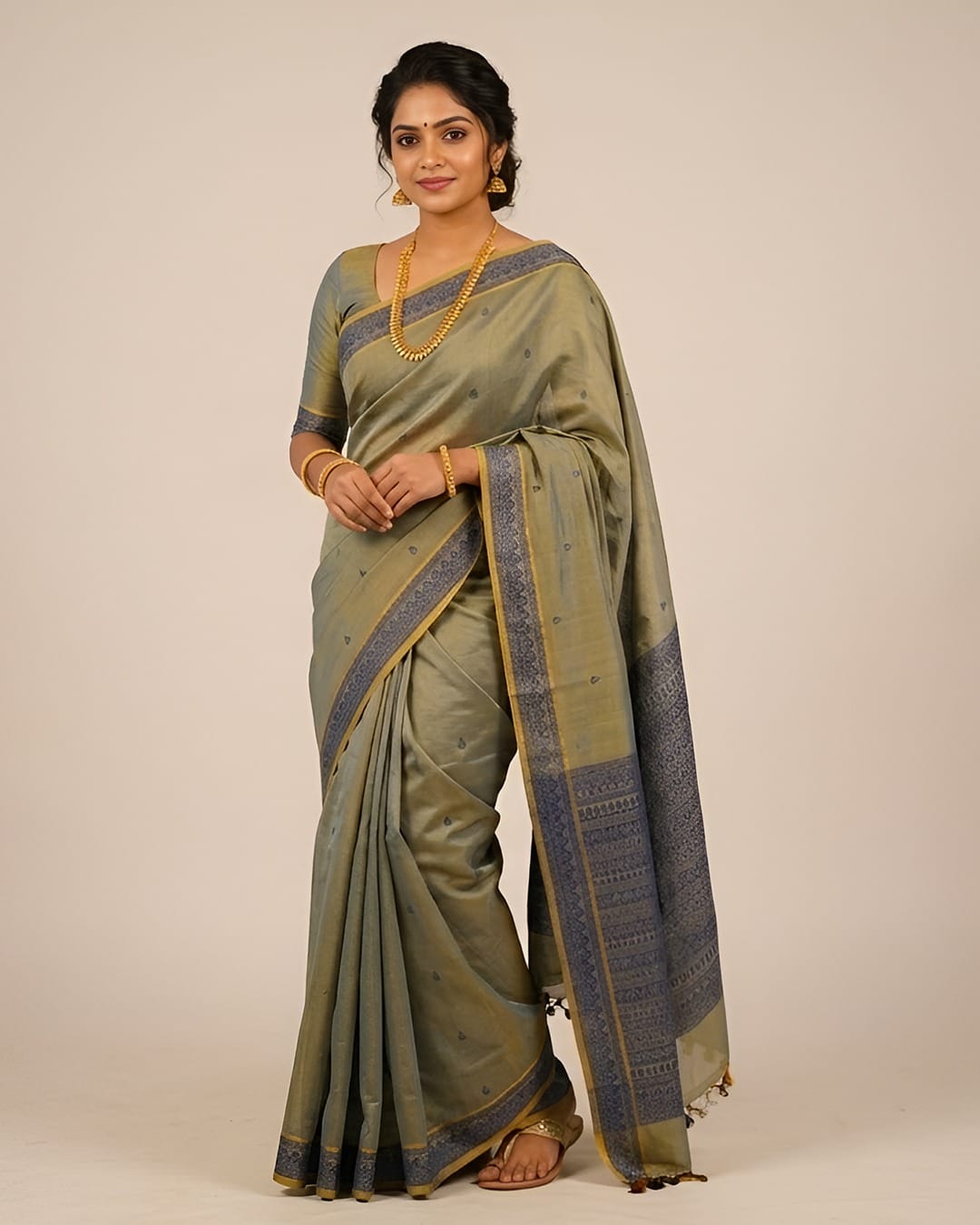
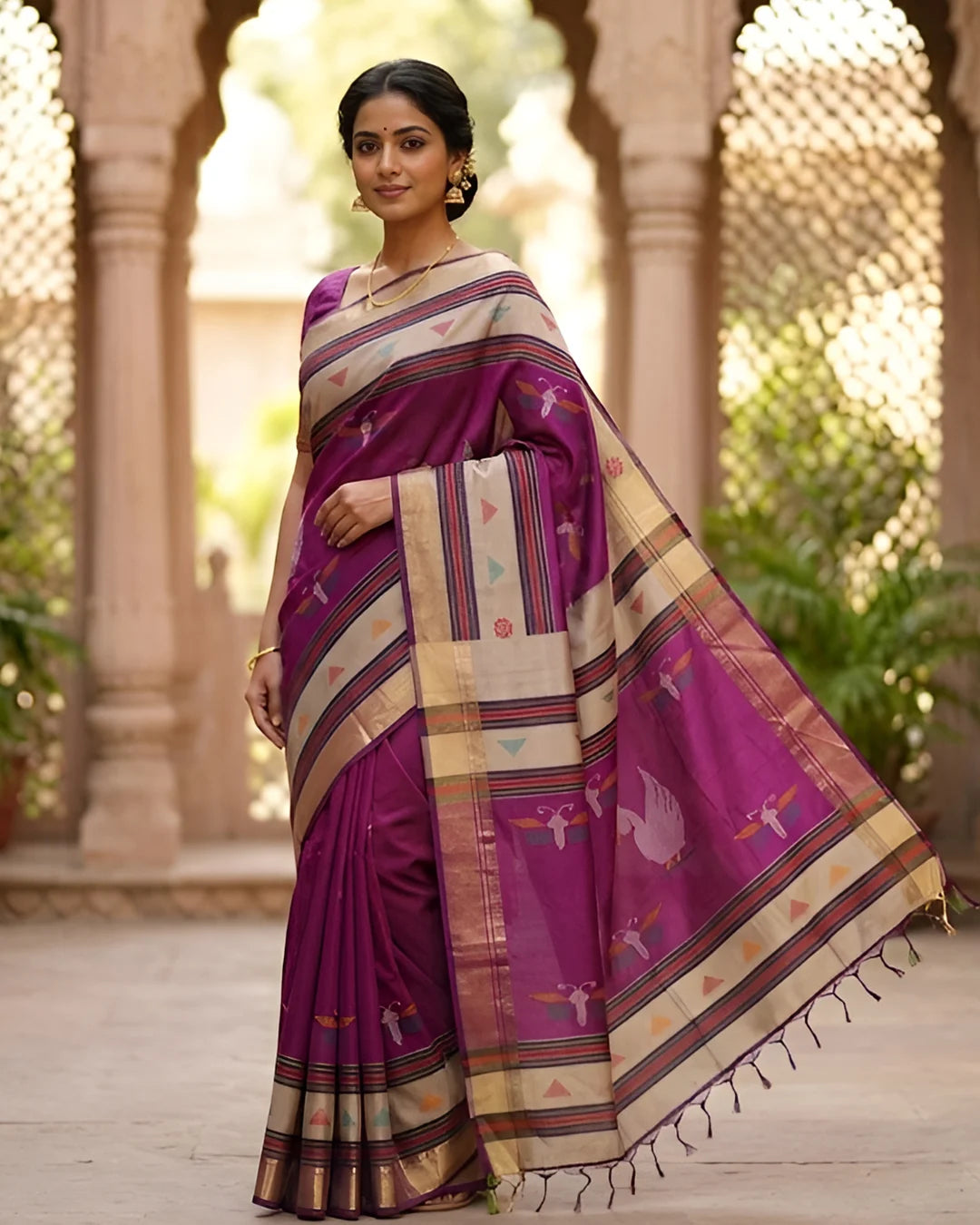
Structured fabrics like tussar silk, raw silk, and heavier cottons hold their shape through the day. They don't collapse into softness by 4 pm, and they photograph with a certain crispness that flowier fabrics simply can't match. Structured Banarasi weaves are worth considering here too - the body and weight of a well-woven Banarasi gives a saree the kind of presence that a lighter fabric won't. This is the fabric doing half the work before you've said a single word in the meeting.
Color as a statement of authority
If fabric gives you structure, color gives you presence. Solid, confident blocks of color tend to read as more authoritative than busy patterns - navy, charcoal grey, deep burgundy, bottle green, and black are the colors that consistently show up in rooms where decisions are being made.
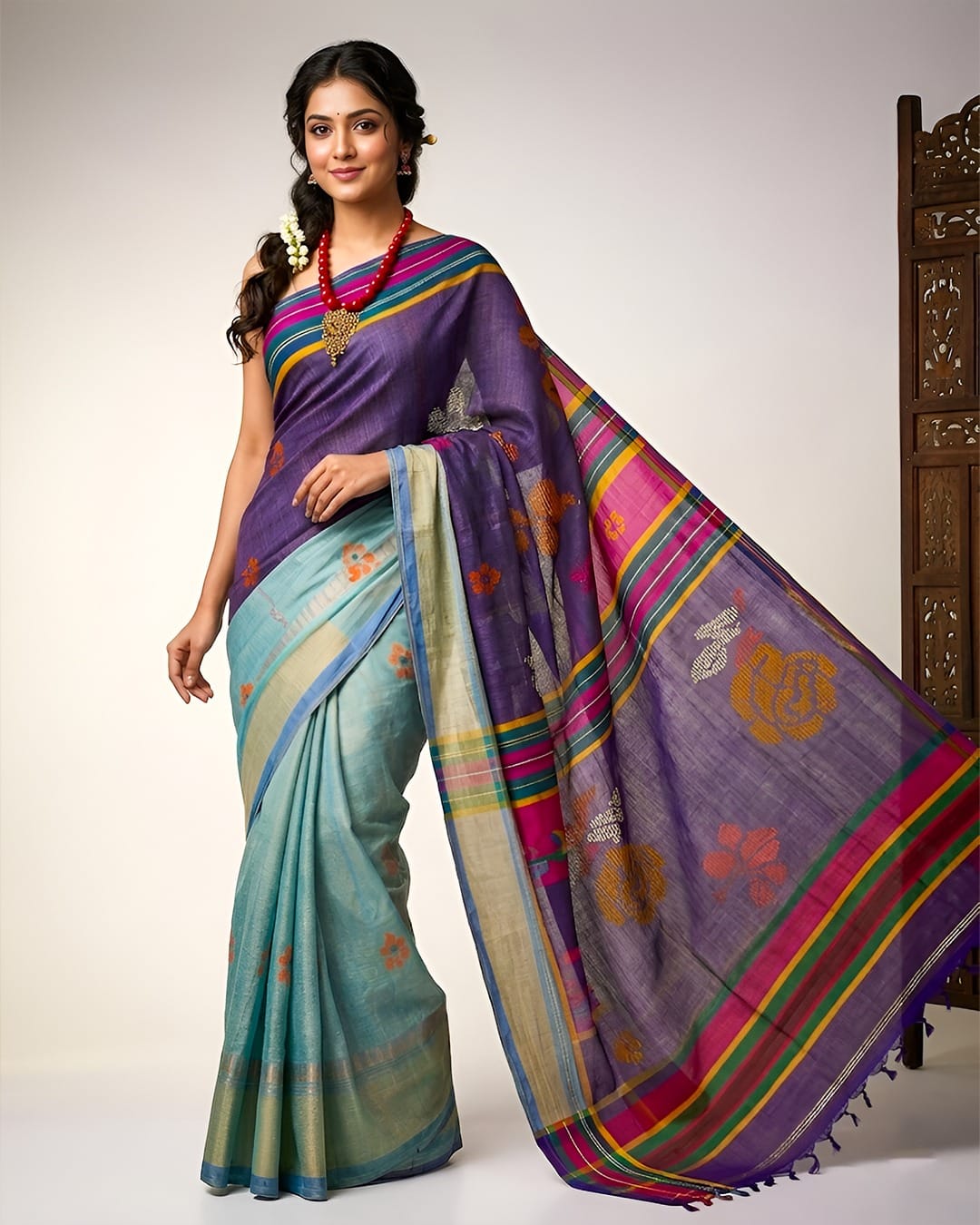
That doesn't mean prints are off the table entirely. A bold print can still work in a power-dressing context, but it needs restraint - a controlled scale and a limited palette, not a saree covered in scattered motifs. The difference between "interesting" and "distracting" usually comes down to whether the print feels intentional or busy.
The drape and the posture it demands
A power saree isn't just about what fabric or color you choose - it's about how it's worn. A crisp set of pleats, evenly spaced and firmly tucked, does more for your silhouette than any accessory. A pallu that's pinned in place, rather than left loose and shifting, signals that nothing about your outfit is an afterthought.
There's a physical side to this too. A well-draped saree changes how you stand and move - it asks for a straighter back and more deliberate steps, and that posture is doing quiet work for you before you've even opened your mouth.
Accessorize like you mean it
The instinct with power dressing is often to add more - more jewellery, more layers, more visible effort. The opposite usually works better. One strong piece says more than five small ones: a structured handbag instead of a delicate potli, a single statement earring instead of a full jewellery set, a watch instead of a stack of bangles.
Restraint, here, is its own kind of statement. It tells the room you didn't need to try that hard.
Structure doesn't mean discomfort
None of this should come at the cost of actually being able to move through your day. A power saree that's too stiff to sit in comfortably, or too heavy to wear through back-to-back meetings, defeats its own purpose. If your day also calls for something lighter - a normal desk day between the big moments - our everyday office edit is worth keeping in the rotation alongside your power pieces, so you're not choosing between authority and comfort every single day.
Building your power-dressing edit
The easiest way to start is with two or three sarees in structured fabrics and confident, solid colors - enough to rotate through your highest-stakes days without repeating the same look every week. Our power dressing collection is built around exactly this idea: pieces with the fabric weight and color presence to hold a room, without asking you to sacrifice comfort to get there.