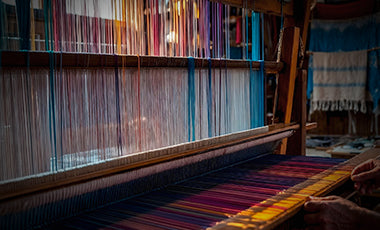
Some sarees you can find four or five of, ready-made, on a shelf. This one, you can't.
This piece is woven on pure silk, with shikargah work done entirely in real gold and silver zari - genuine sona-rupa, not a synthetic imitation. The work runs across the entire saree, front to back; only the blouse piece is left plain. Everything else you see, every motif, is real jaal and shikargah work, built into the fabric itself.
And it takes time — a minimum of 20 to 25 days on the loom for a single saree to come off, start to finish.
This is the actual difference between handloom and power loom
It's worth pausing on that number, because it's the clearest, most honest way to explain what "handloom" actually means. Handloom isn't something that happens overnight. A power loom can produce four or five sarees in the time it takes a handloom weaver to make one — because a power loom is a machine running on a schedule, and a handloom is a person, working by hand, day after day, for weeks.
This particular saree took more than 20 days. Some pieces take over a month. That's not a flaw in the process. That is the process — and it's the surest sign you're holding genuine handloom, not something dressed up to look like it.
What you're actually buying
When you choose a well-made handloom saree, you're not simply bringing home something beautiful. You're supporting a weaver — a real person who has put in day and night effort, weeks of concentrated work, to bring one single piece into existence. That's a very different kind of purchase than picking something off a shelf that was made in an afternoon.
It's slower. It's more expensive. And it's exactly what makes it worth choosing.