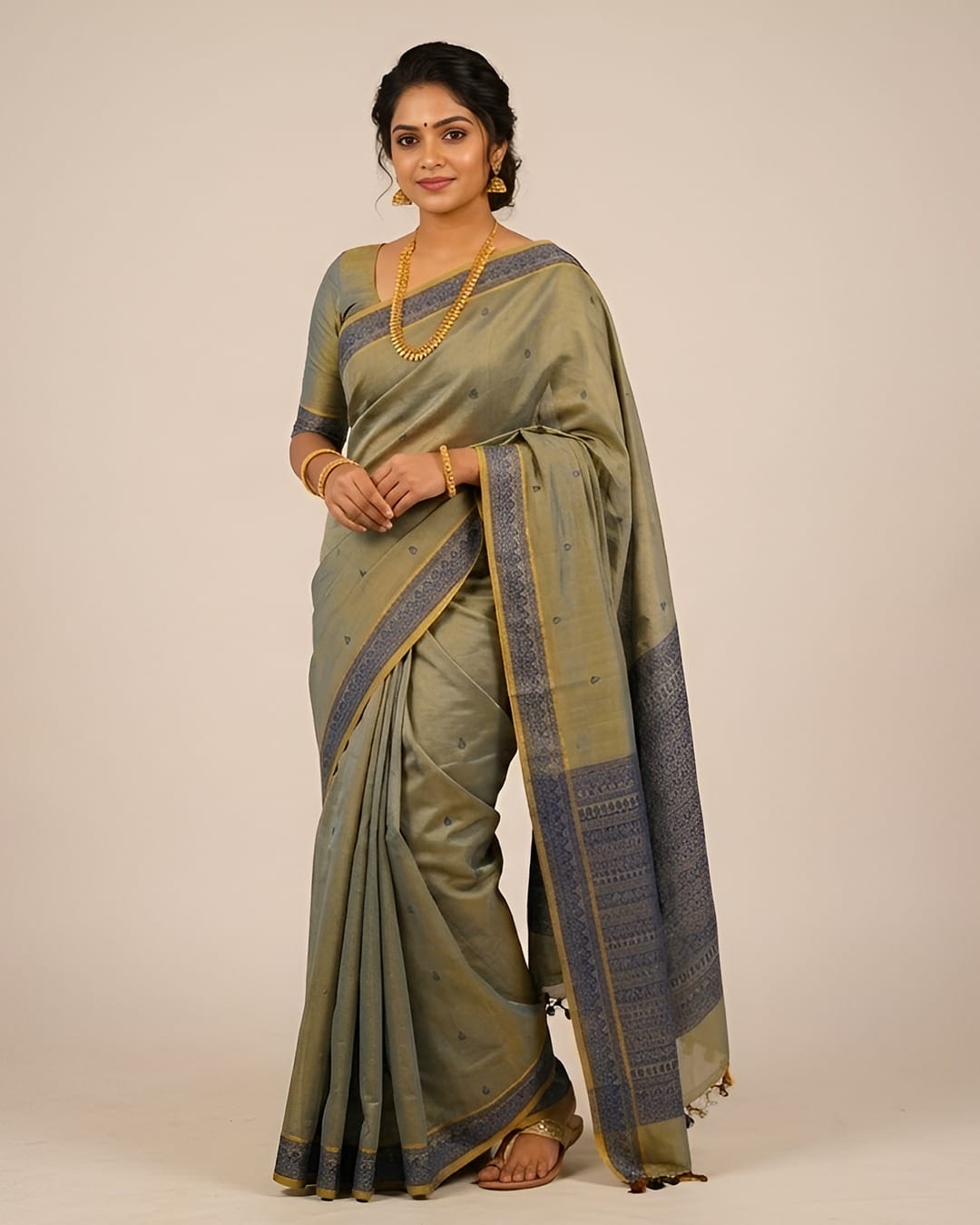
Pick up a Bhagalpuri tussar saree and the first thing you notice is that it does not try to impress you. There is no loud shine and no stiff glitter. The fabric has a dry, slightly grainy feel and a soft golden glow, like late afternoon light on a wheat field. That quiet character is exactly why so many women reach for a Bhagalpuri tussar silk saree when they want something festive but not fussy.
This guide walks through where these sarees come from, what a GI tag does and does not tell you, how to recognise a genuine piece, and how to wear and care for one.
What is tussar silk?
Tussar silk (also spelt tasar or tussah) is a wild silk. Unlike mulberry silk, where silkworms are reared indoors on mulberry leaves, tasar silk comes from the Indian silkworm Antheraea mylitta, which lives and feeds on trees in the open. According to the Central Silk Board, its main food plants are Asan and Arjun, and the rearing is done in nature, on trees. Government sericulture statistics group it under vanya, or non-mulberry, silk, along with muga and eri (MoSPI).
Under magnification, tussar fibres look flat, like tiny ribbons, while mulberry fibres look rounder (Mississippi Entomological Museum). That structure is one reason tussar catches light softly and feels textured.
From cocoon to saree
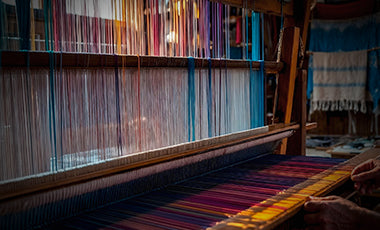
It helps to know how long the journey is. Tasar cocoons are collected from the forest or from trees where the worms were reared, so a good deal of the supply chain starts outdoors, with tribal and forest communities (Mississippi Entomological Museum). The cocoons are then turned into yarn by reeling or spinning, according to sericulture course notes. Reeled yarn is finer; spun yarn is coarser, which is one reason two tussar sarees can feel so different. The yarn is dyed, set up on the loom and woven. Only the last step happens in the weaver's home or workshop, but every step shapes the final feel of the cloth.
Why Bhagalpur?
Bhagalpur, in Bihar, is often called the "Silk City" of India. Weaving tussar here is an old, family-based craft. Sources describing the region mention the three rivers, the Ganga, the Kosi and the Champanala, as part of the local identity of Bhagalpuri silk (Open Magazine).
One small clarification helps when you shop. Tussar silk is also produced in other states. India is a leading tussar producer, and Jharkhand is currently described as the biggest producer (Wikipedia: Tussar silk). "Bhagalpuri" tells you about the weaving centre and style, not that every tussar thread was spun in Bhagalpur.
The GI tag: what it means for your saree
A Geographical Indication (GI) is a sign used on goods that come from a specific place and have qualities or a reputation linked to that place. Bhagalpur Silk is listed as Registered in the Government of India's GI registry, under application number 180, with the Bhagalpur Tussar Silk Development Samiti as the applicant.
A word of honesty here: you will find different registration years quoted online (some say 2009, others 2013). Check the registry entry itself if you need the exact date.
Practical meaning for buyers:
- A GI is a good sign of regional origin and tradition. It protects the name "Bhagalpur Silk" for goods from that region.
- A GI is not a guarantee for every product that mentions it. Ask whether the specific saree comes from an authorised producer.
- A GI does not replace other checks. It does not, on its own, tell you whether a saree is handloom or whether the silk is pure.
Handloom tussar: how to tell the real thing
Because tussar is popular, "tussar look" fabrics are everywhere. Here is a simple, honest checklist.
- Feel the surface. Genuine tussar has a slightly uneven, grainy, dry texture. Very smooth, slippery cloth is more likely mulberry or a blend.
- Look at the sheen. Tussar has a soft, matte glow. High gloss is a red flag, as sellers who write about tussar often point out.
- Read the listing carefully. Words like "tussar look", "tussar feel" or "art silk" are different from "100% tussar silk". Good listings mention handloom weave and origin.
- Check the reverse side. Handloom weaving shows small thread irregularities. A machine-perfect back suggests power loom.
- Ask about certification. The Silk Mark confirms pure natural silk, but it does not by itself confirm handloom. Ask about the Handloom Mark too, and read our guide on how to identify a genuine handloom saree.
- Weigh the price. Real tussar is not always cheap. A very low price for "pure handloom tussar" is worth questioning.
Questions to ask before you buy
Even with a good listing, a few direct questions save regrets:
- Is this 100% tussar silk, or tussar blended with another yarn?
- Is it handloom-woven? Can you show the reverse side?
- Does it carry a Silk Mark or Handloom Mark? Can I see the tag?
- Is it dyed, printed, hand-painted or left in its natural colour?
- How should I wash it, and what is your return policy?
Colours, designs and what to look for
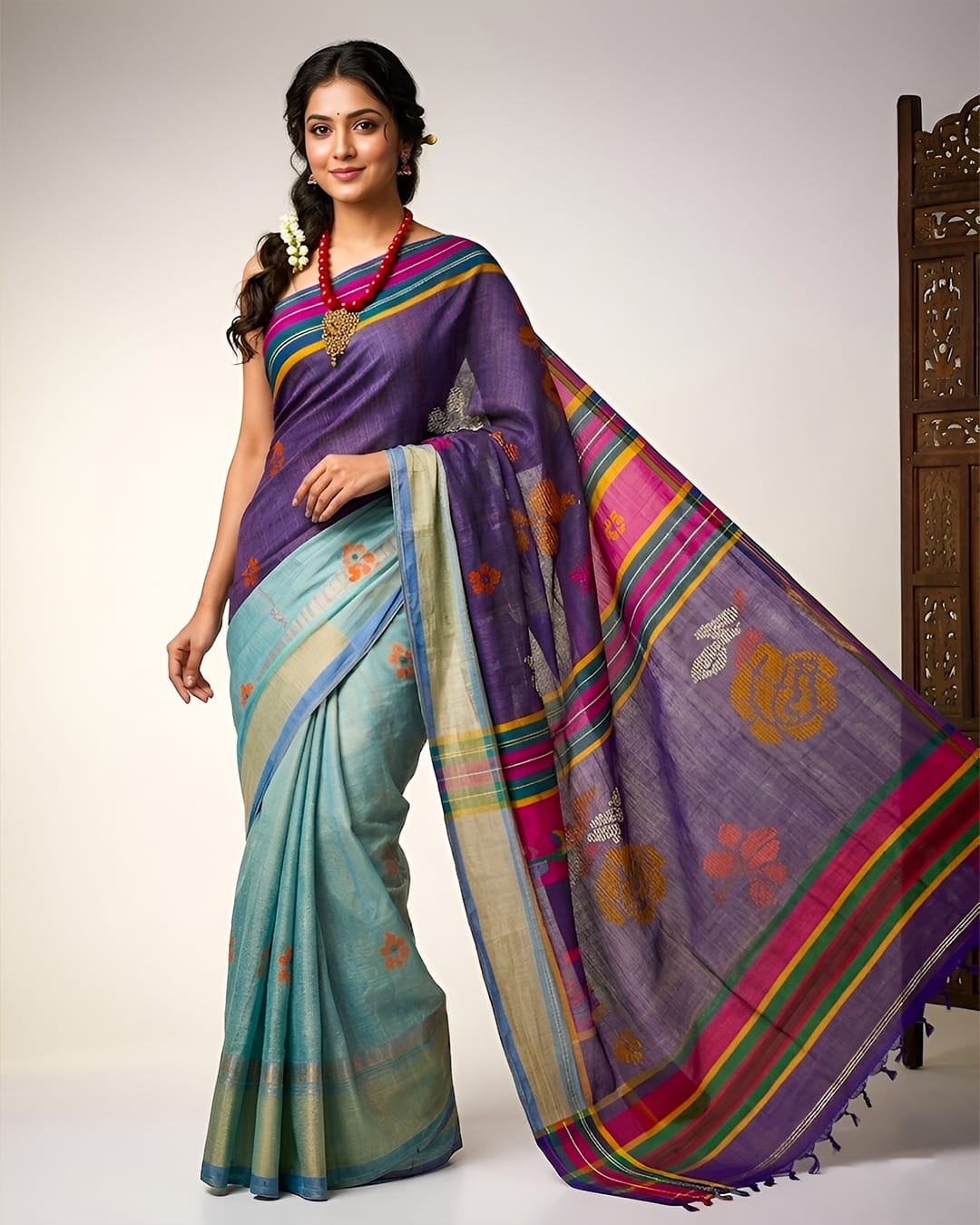
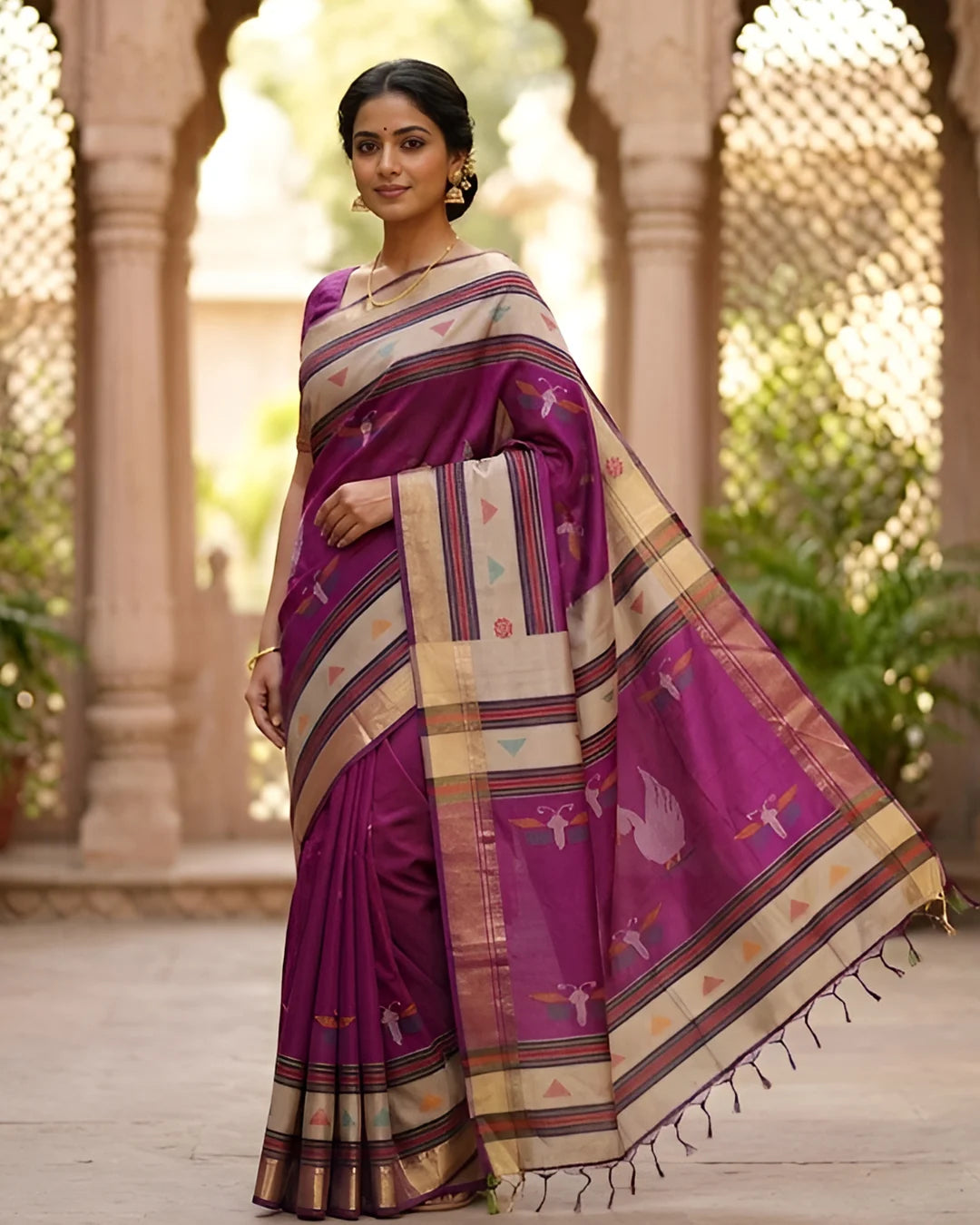
Bhagalpuri tussar is often sold plain, with simple borders, in earthy natural shades. You will also find dyed, block-printed, hand-painted and embroidered versions. Some sellers use the term "ghicha" for a more textured type of tussar yarn. If a listing uses a specialised word, ask the seller what it means for that saree.
The golden natural tone is part of tussar's identity, so do not be disappointed when a "cream" saree looks slightly warm. That warmth is a feature.
How to wear a Bhagalpuri tussar saree
Tussar's matte finish makes it more versatile than people expect.
- Day events and festivals: Pair with a contrast raw-silk or silk-blend blouse and simple silver or oxidised jewellery.
- Weddings as a guest: Choose a richly coloured saree with a zari border and heavier accessories.
- Work: Pick muted shades and keep the drape crisp. Tussar holds its shape well.
- Summer: Tussar is lightweight and airy, so it is a comfortable silk for warm weather.
Blouse fabrics such as silk blends or cotton-silk work especially well with tussar's textured surface. For occasion ideas, see our guide to Indian festival outfit ideas for 2026.
Caring for your tussar saree
- Dry-clean for the first wash, and always for sarees with zari, embroidery or hand-painted work.
- If you must hand wash a plain piece, use cold water and a mild liquid soap made for delicates.
- Store in a breathable muslin or cotton cloth, never plastic.
- Avoid long direct sunlight, which can fade colours.
- Tussar fibres are shorter than mulberry silk fibres, so handle with a gentle hand and avoid harsh rubbing.
Where to explore
If you would like to see Bhagalpur-style silk in person, browse our tussar silk sarees or the wider Bihar saree collection. Our FAQ notes that our Bhagalpur silk sarees come with a GI tag; each product page will show the details for that piece, and you can ask us on WhatsApp for more.
A Bhagalpuri tussar saree is the kind of piece that gets better the more you wear it. Soft, light, and quietly rich, it is a good first step into handloom silk.
FAQ
What is a Bhagalpuri tussar silk saree?
It is a saree woven in the Bhagalpur region of Bihar from tussar silk, a wild silk with a textured feel and a soft golden, matte look.
Is tussar silk pure silk?
Yes. Tussar is a natural silk made by wild silkworms. It is a non-mulberry silk, and it feels coarser and more textured than mulberry silk.
Does Bhagalpur silk have a GI tag?
Yes. "Bhagalpur Silk" is listed as Registered in India's GI registry. Always confirm that the specific saree you are buying is from an authorised source.
How can I identify a real handloom tussar saree?
Look for a grainy, uneven texture, a soft matte sheen, small irregularities on the reverse, clear listing details such as "100% tussar silk" and "handloom", and a realistic price.
Is a tussar saree good for summer?
Yes. Tussar is considered lightweight and breathable, so many people find it comfortable in warm weather.
How do I wash a tussar silk saree?
Dry-cleaning is safest, especially for first wash and for embellished sarees. For plain pieces, hand wash in cold water with a mild liquid soap and dry in the shade.
What is the difference between tussar and mulberry silk?
Mulberry silk comes from silkworms reared indoors on mulberry leaves and is smoother and glossier. Tussar comes from wild silkworms and has a textured, matte look.