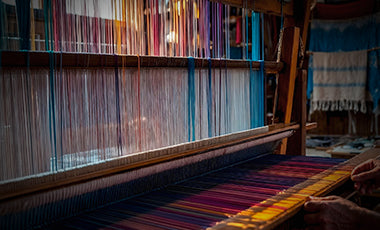
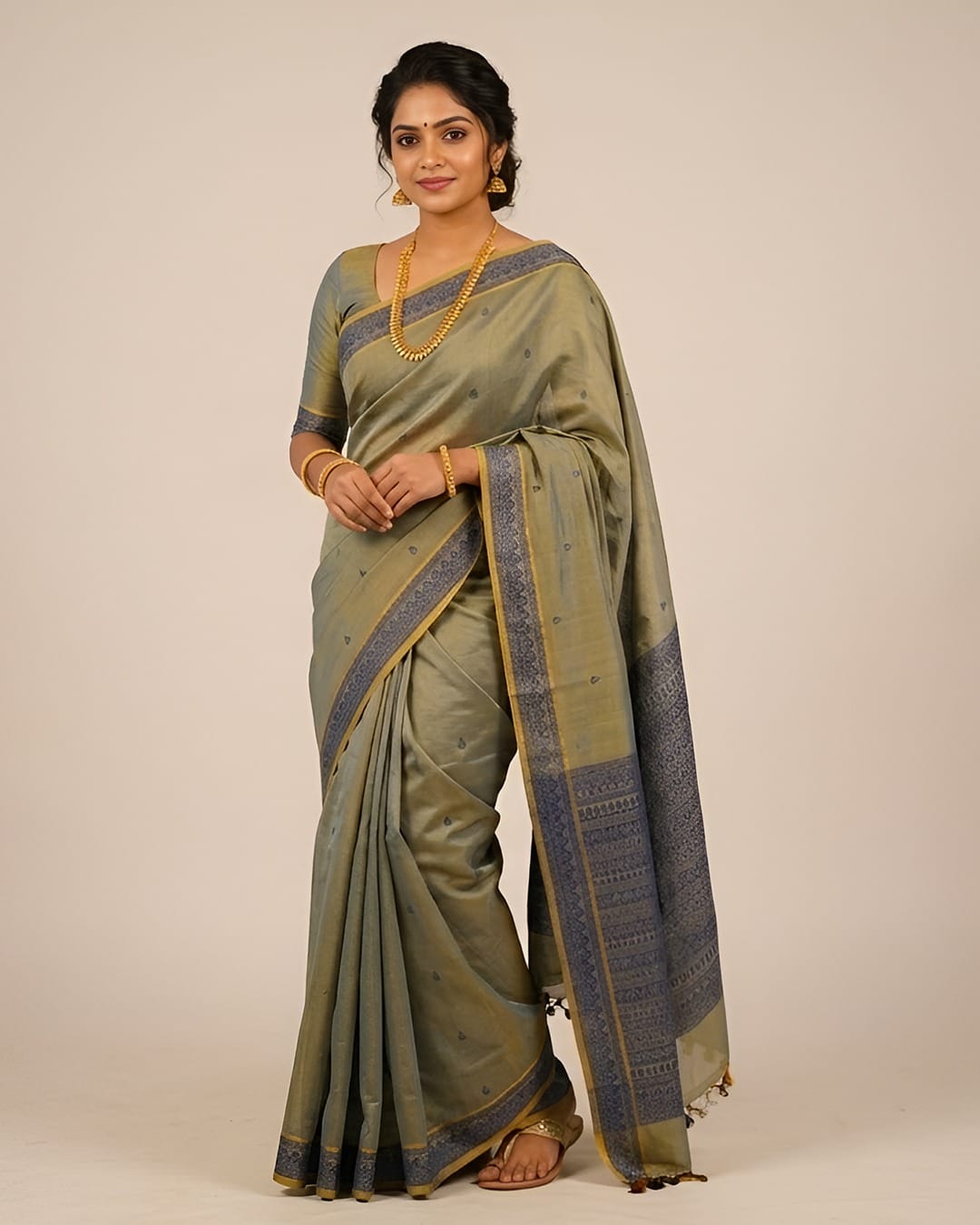
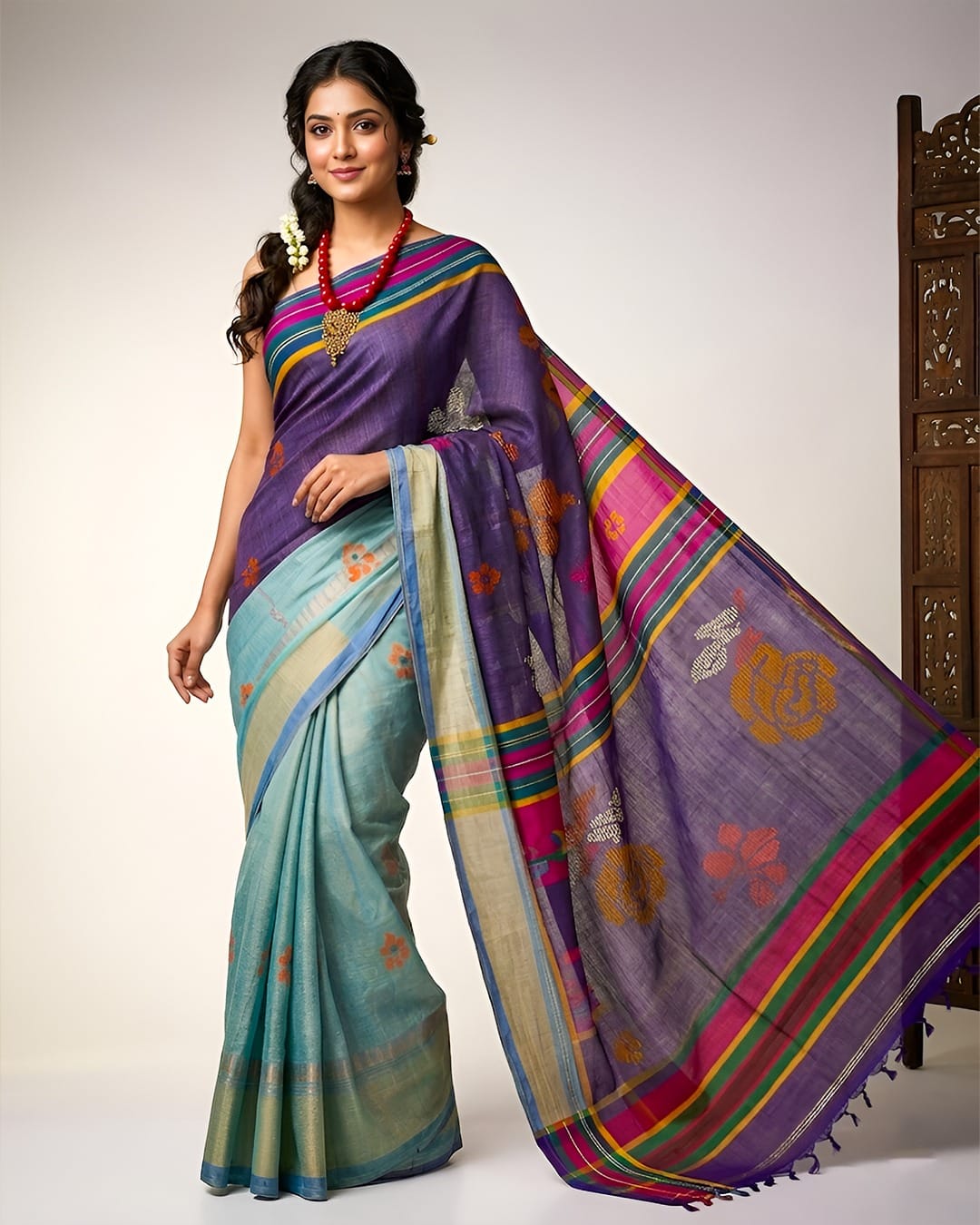
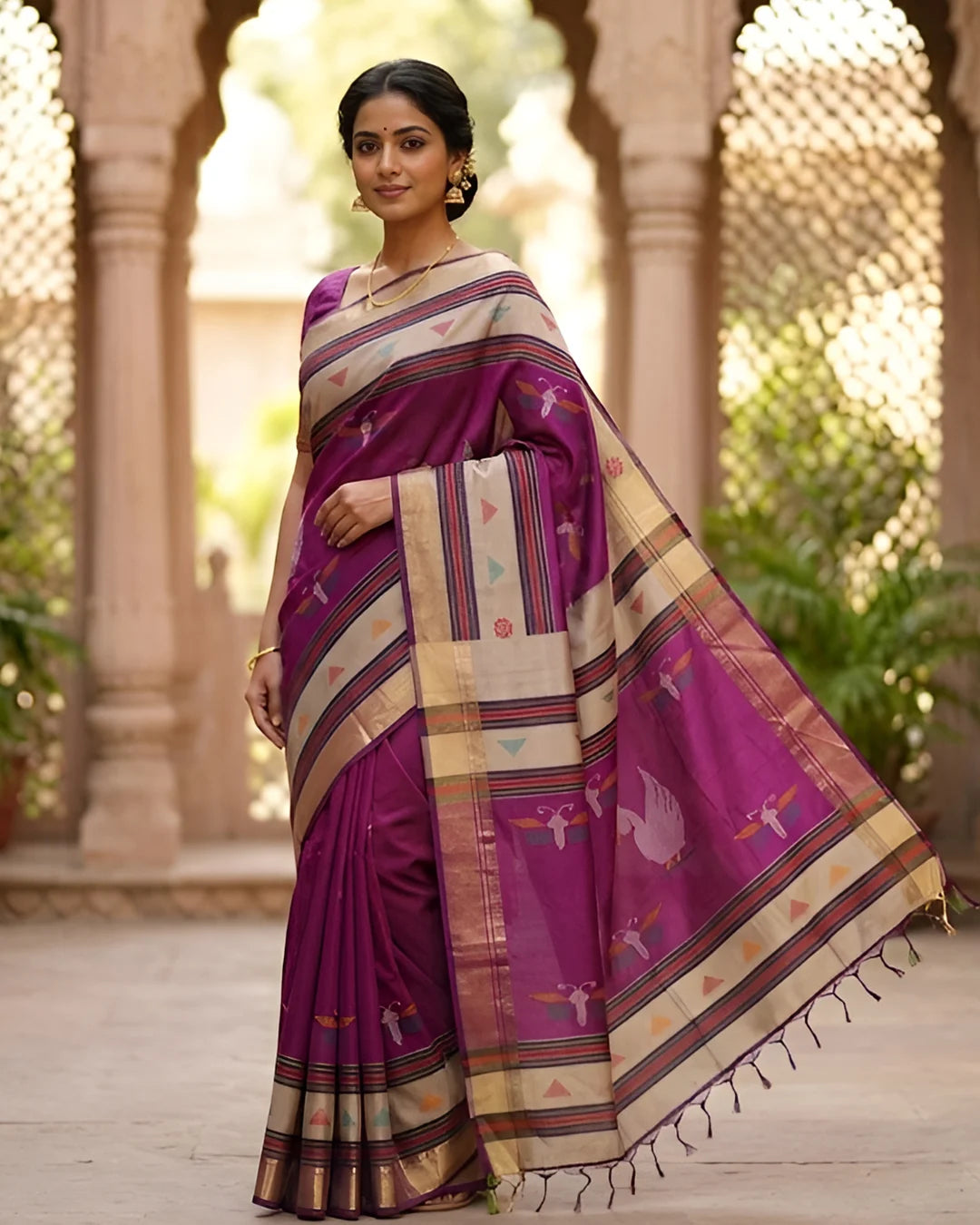
There's a common hesitation around Chanderi sarees: the belief that they're delicate, fussy, and difficult to care for. It's a fair assumption based on how Chanderi used to be made — but it isn't true anymore, and the reason is entirely technical.
The old yarn vs. the new yarn
Chanderi sarees used to be woven using a single-ply yarn — thinner, more delicate, and genuinely more prone to snagging or wear over time. That's where the "difficult to maintain" reputation came from, and for older-style Chanderi, it was a fair warning.
What's used now is different. The yarn is pure soft silk, woven in two-ply rather than single-ply — meaning two strands of silk twisted together for real strength, not just softness. That single change removes almost every maintenance concern people associate with Chanderi.
What "zero maintenance" actually means here
According to our weaving partner, these sarees can be washed however you'd like — including a first professional dry clean, followed by simple hand-washing after that. More importantly: two-ply silk Chanderi won't tear, won't pill or "fluff up" (phoolna), and won't stick or cling awkwardly the way older or lower-quality weaves sometimes do.
In short — the fragility people associate with Chanderi belonged to an older construction. Two-ply soft silk simply doesn't have that problem.
Why this matters
If you've avoided Chanderi because you were worried about handling a delicate, high-maintenance fabric, that concern is largely outdated. Ask about the yarn ply before you buy — it's the one detail that actually determines how easy (or difficult) a Chanderi saree will be to live with.