From conversations with our weaving partners
Chanderi carries a reputation that doesn't quite match how it's actually made today — and understanding the gap between the two is the best way to understand what you're really buying when you choose it.
"Isn't Chanderi hard to maintain?" Not anymore.
It's a common hesitation, and a fair one — based on how Chanderi used to be woven. Older Chanderi used a single-ply yarn: thinner, more delicate, genuinely more prone to snagging and wear. That's where the fragile, high-maintenance reputation came from.
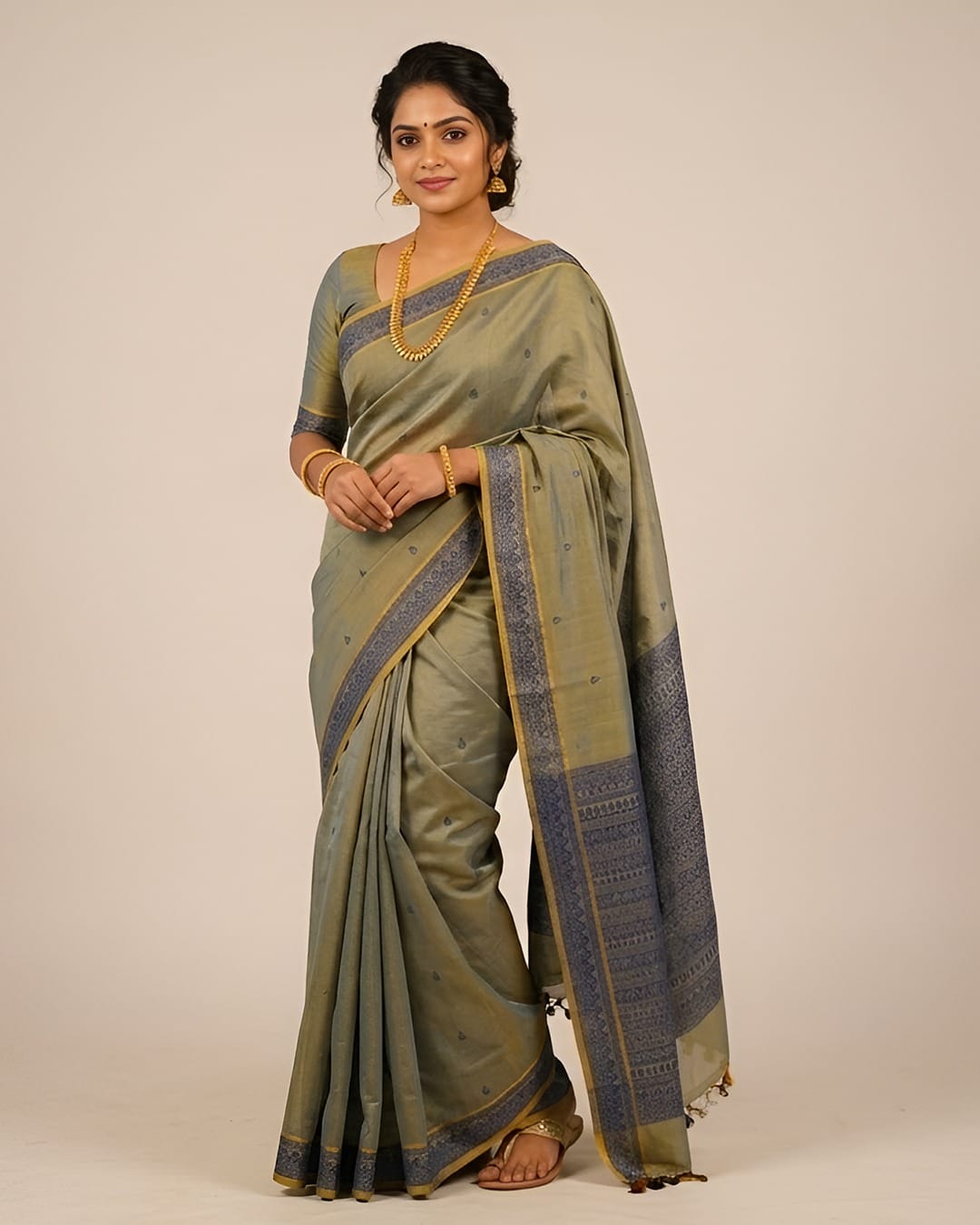
What's used now is different. Today's Chanderi is woven in pure soft silk, two-ply rather than single-ply — two strands of silk twisted together for real strength, not just softness. That one change removes nearly every maintenance concern people still associate with the fabric.
According to our weaving partner, these sarees can be handled with almost no fuss: a first professional dry clean, followed by simple hand-washing after that. Two-ply silk Chanderi won't tear, won't pill or "fluff up," and won't cling or stick the way older or lower-quality weaves sometimes do.
If you've held back from Chanderi expecting to babysit it, that concern belongs to an older construction — not to what you'd actually be buying today.
What makes the fabric itself special
Beyond durability, Chanderi silk has a genuine, physical property worth knowing: it regulates temperature naturally, feeling warm in winter and cool in summer. That's not a marketing line — it's simply how the fiber behaves.
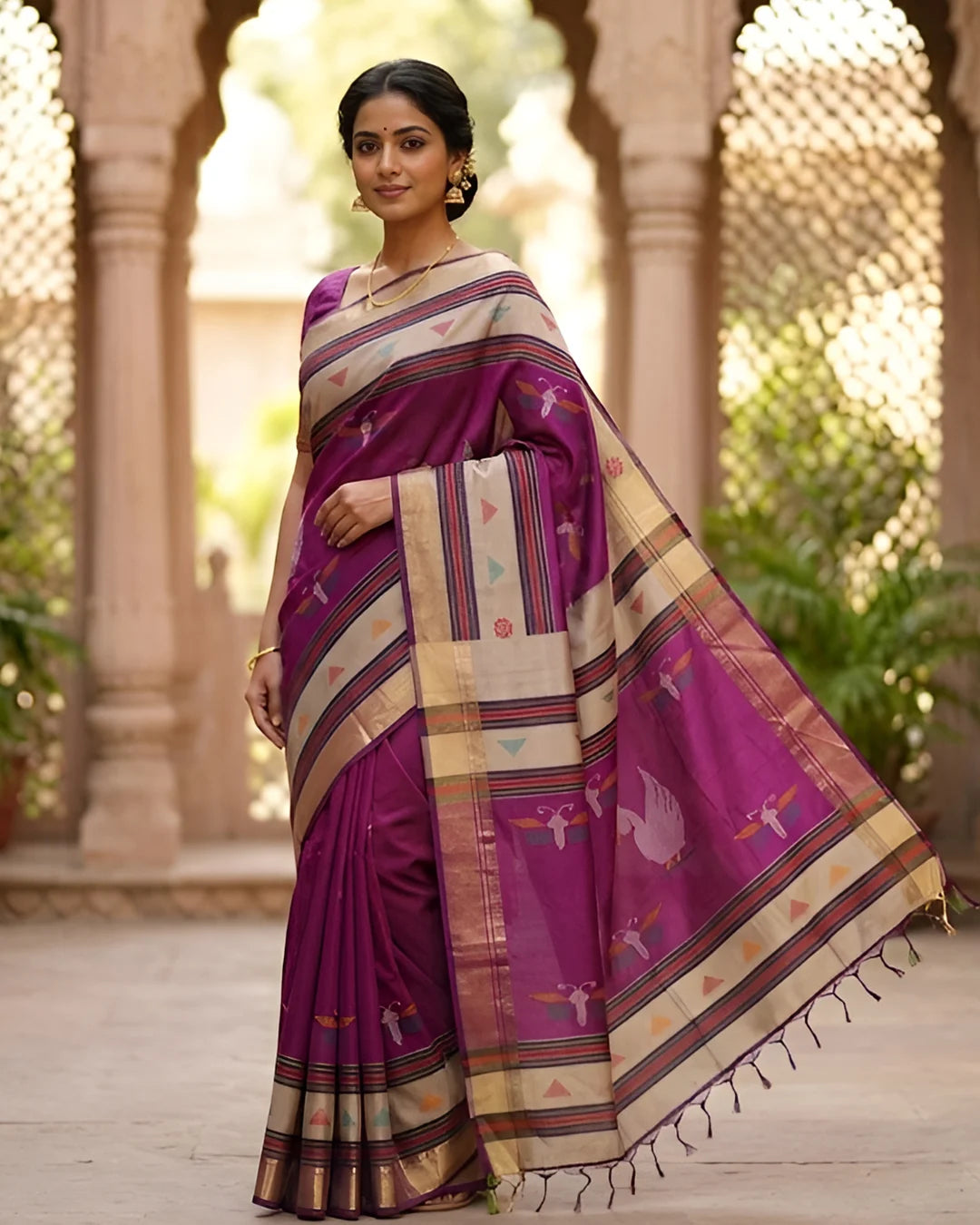
And the design technique behind Chanderi's traditional motifs (booti) is built for permanence.
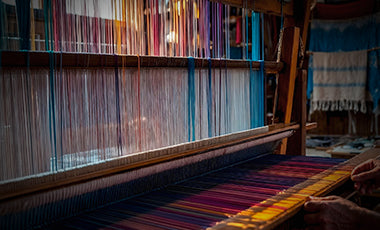
The work is done through note-cutting, using a small wooden stick (tilli) that the weaver uses to build the design directly into the fabric as it's being woven — not layered on after.
The result: a saree where the design integrity is woven into the very structure of the cloth. As the traditional Gujarati handloom saying about a related weave puts it — the fabric may eventually wear before the design ever does.
The hands behind the craft
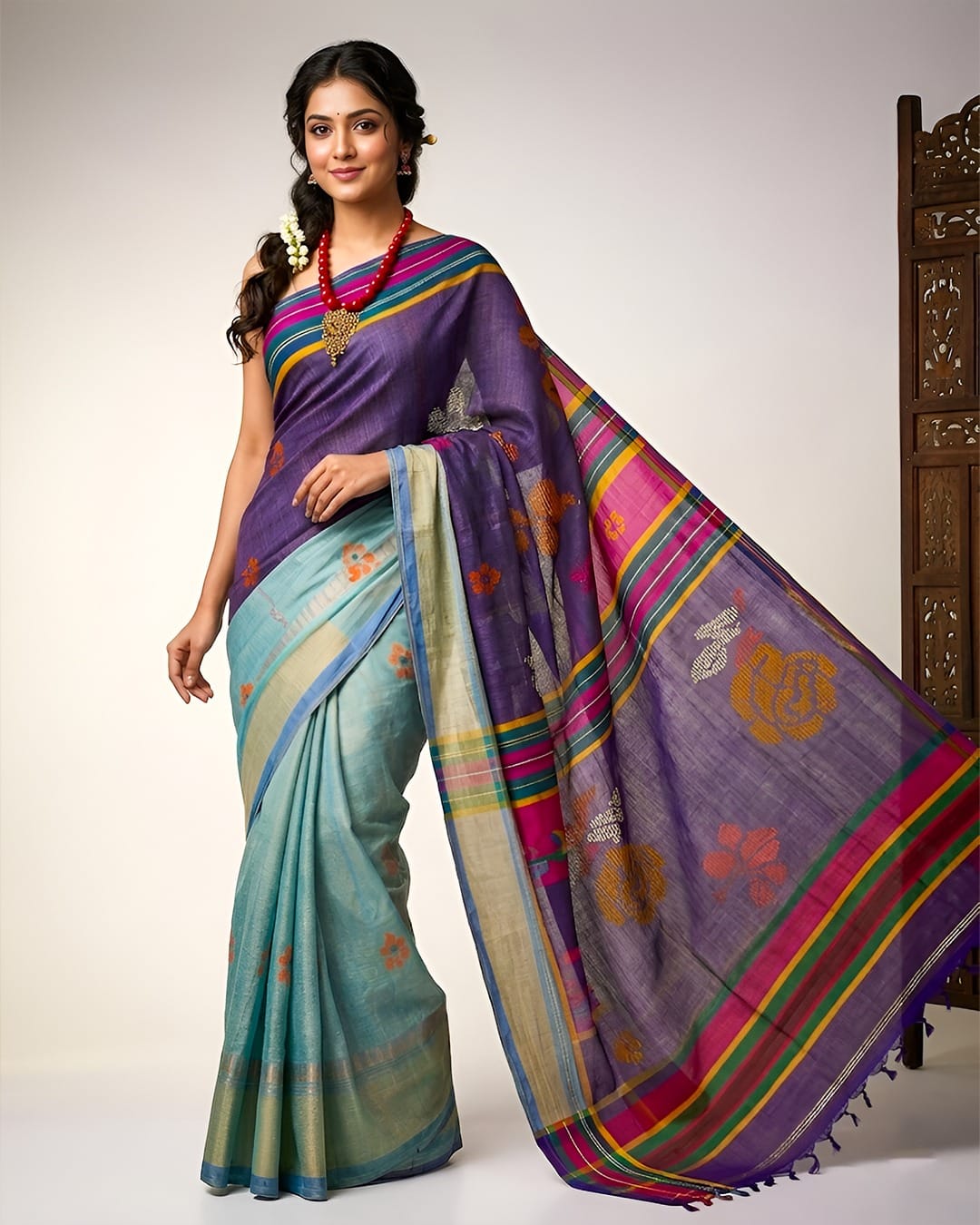
Some of this fabric's finest work comes from artisans like Vijaya, who wove one particularly vibrant, richly detailed Chanderi entirely by hand — both hands, and both feet, adapting the loom to work for her, despite not having the use of her legs.
That single saree took 12 to 15 days on the loom, woven on pure Mal Chanderi with intricate ekalnaliya meenakari booti work carried consistently across the pallu, body, and blouse piece.
It's easy to describe a saree only by its color and pattern. It matters just as much to know whose hands actually made it — and what real skill and patience went into every one of those 12 to 15 days.
A quiet request, worth passing along
One of our weaving partners shared something with us that felt important enough to repeat exactly as it was said.
In most large cities — Delhi, Bengaluru, Mumbai — buyers are increasingly choosing plain, solid colors over traditional woven motifs. It's a small shift in taste, but it carries a real cost: these traditional booti patterns, and the handloom craft behind them, are slowly being left behind.
The request was simple: when you choose a saree, choose handloom — and choose the traditional booti work specifically.
This craftsmanship exists nowhere else in the world. It survives only if people keep choosing it.
Why this all matters
Chanderi today isn't the fragile, high-maintenance fabric its old reputation suggests. It's a two-ply silk built to last, worn by design across seasons, woven — sometimes against real physical odds — by artisans whose skill deserves to be seen, not just worn.
Choosing it isn't just a styling decision. It's a small, direct way of keeping a centuries-old craft, and the people who carry it, moving forward.