From conversations with our weaving partners in Banaras
Ask most people what makes a saree "Banarasi," and you'll likely get an answer about silk, or zari, or a particular shine. Ask a weaver in Banaras the same question, and you'll get something more surprising.
Neither the silk nor the betel leaf actually comes from Banaras
Here's a fact that catches almost everyone off guard: Banaras doesn't grow silk, and it doesn't grow the betel leaf (paan) it's equally famous for. Both are known worldwide as unmistakably "Banarasi" — and neither one actually originates there. The silk comes from elsewhere entirely, and the betel leaf traditionally comes from Bombay.
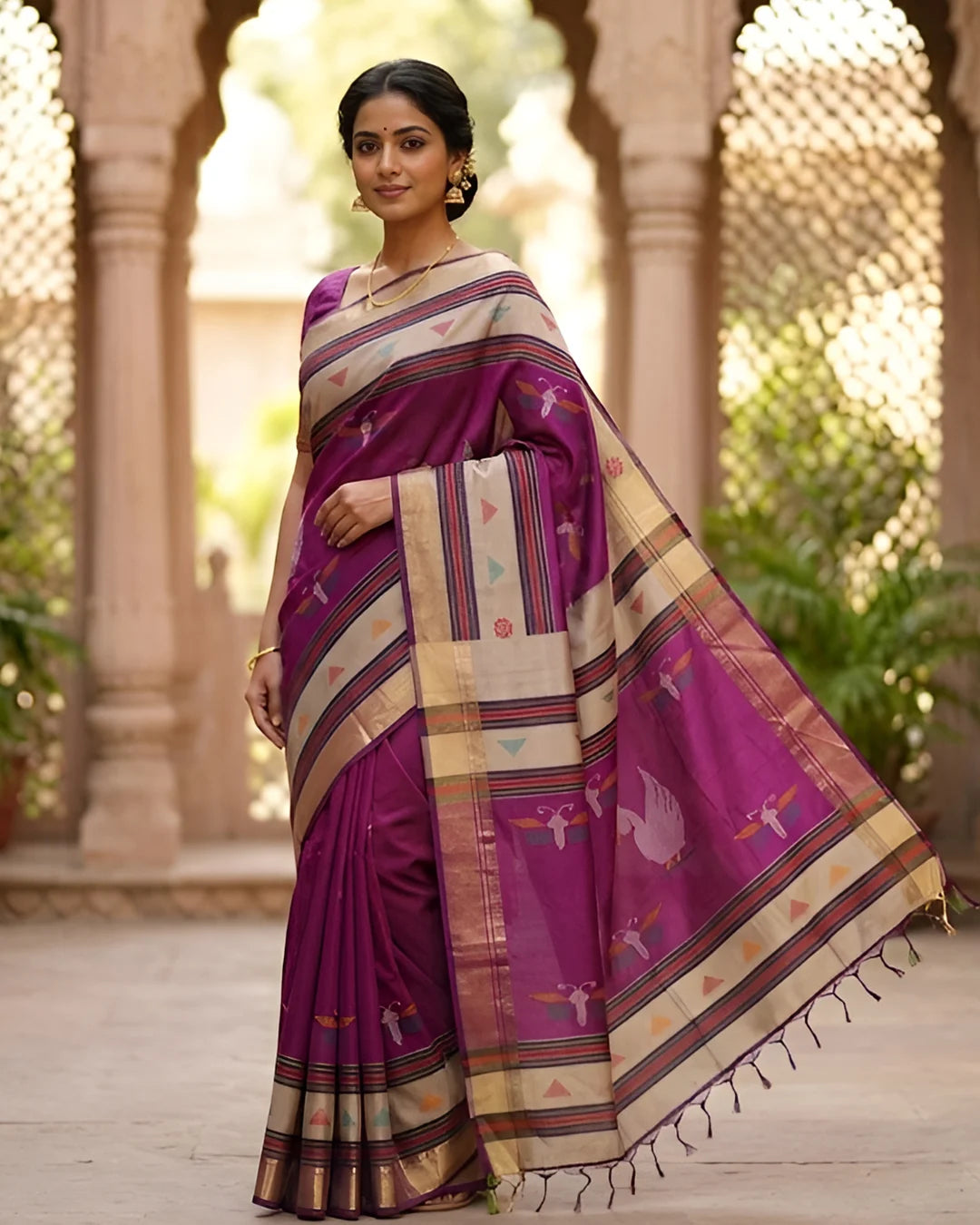
So what makes either of them genuinely Banarasi? Not the raw material — the making. It's the technique, passed down through generations of craftsmen in that specific region, that transforms an imported thread into something the world recognizes instantly as Banarasi silk. The same silk, woven anywhere else, isn't Banarasi. It's the hands and the method that earn the name — not the supply chain.
That distinction matters more than it sounds like it should. It means "Banarasi" was never a claim about where materials came from. It's a claim about a specific, place-bound craft.
Not all silk is equal — and Banaras works with the finest of it
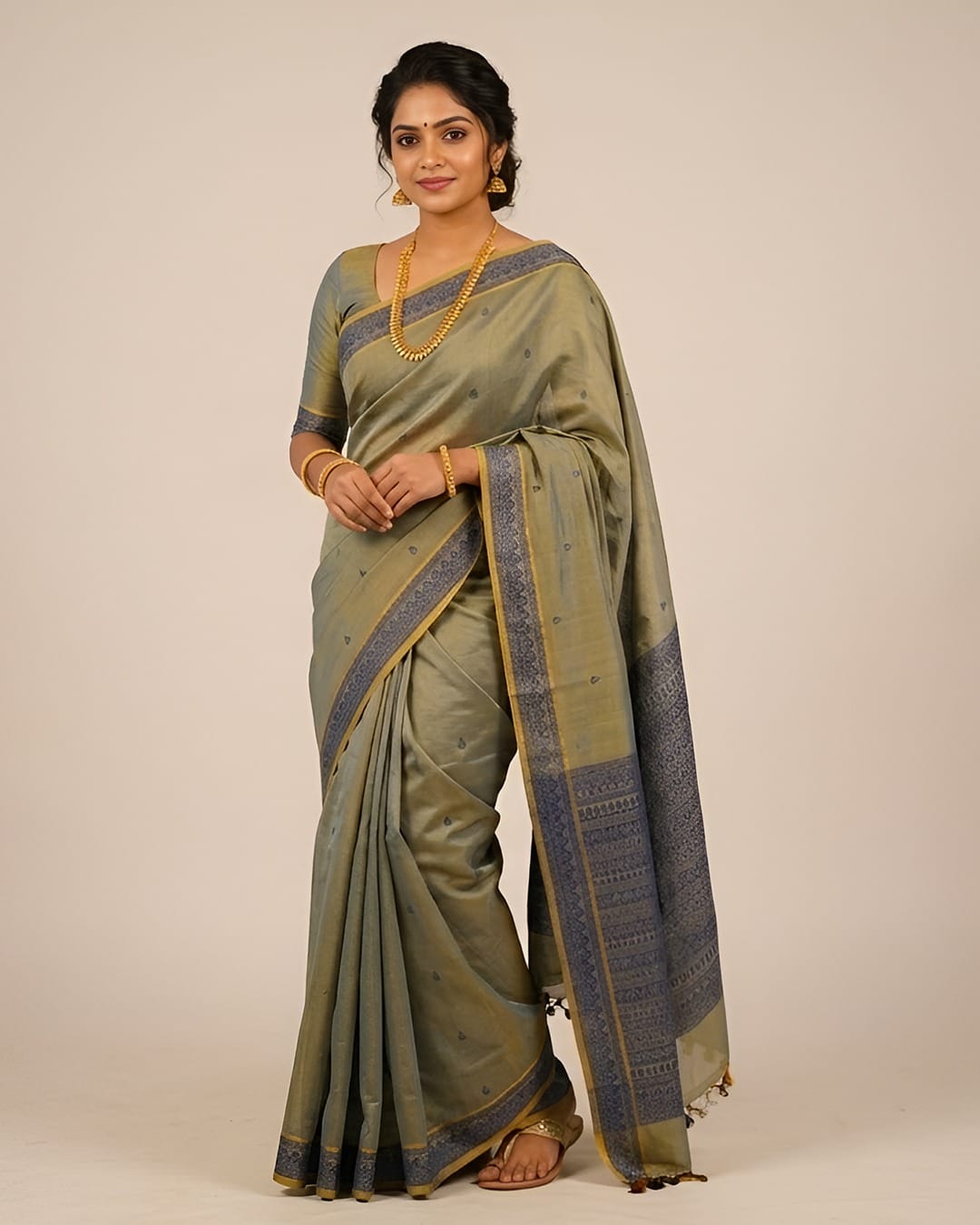
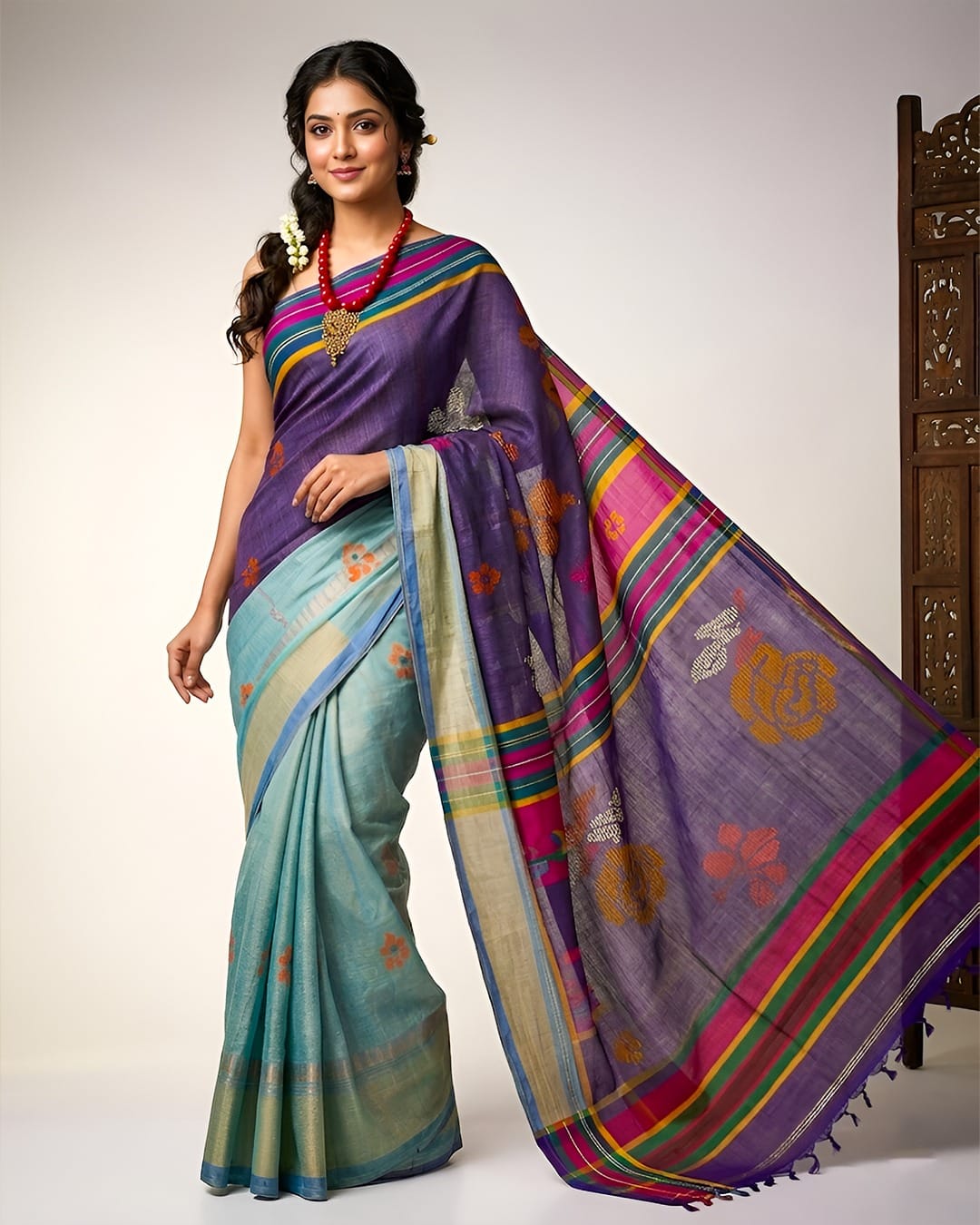
That craft starts with choosing the right silk — and silk, it turns out, isn't one material but a whole family of them. Our weaving partner walked us through the range: Matka silk, Tussar silk, Muga silk, Nal silk, plain silk, and Katan silk. Of these, Katan sits at the top — the finest, most refined grade, reserved for the most premium work. It's the silk most associated with the richest Banarasi weaves.
Tussar silk, for comparison, has its own distinct property: even boiled in hot water, it holds its characteristic texture and firmness rather than softening or losing shape.
Alongside the technical detail, our partner made one point plainly: when a customer pays for silk, they should actually be getting silk — no substitution, no shortcut. That's the baseline the entire craft is built on.
And it has to be made on a handloom — not a power loom
There's a third piece to understanding authentic Banarasi weaving: how it's actually produced.
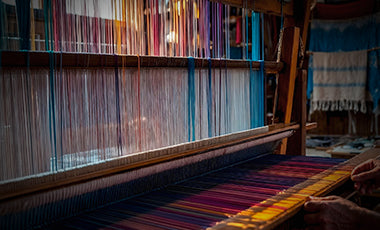
Looms fall into three categories. A power loom is fully mechanized and typically used to produce polyester — fast, synthetic, machine-run. A shuttle loom is semi-mechanized, generally used for cotton and khadi. And then there's handloom: entirely hand-operated, with no motor driving the weave — the category genuine Banarasi silk belongs to, and the reason it can't be rushed or mass-produced the way synthetic "Banarasi-style" fabric can.
This is also why timelines matter so much in this craft. A single richly worked silk saree — real zari, dense motif work — can take 20 to 25 days on the loom, sometimes longer. That isn't inefficiency. It's simply what hand-weaving genuine silk, thread by thread, actually requires.
What this all adds up to
"Banarasi" was never about geography of raw material. It's a name earned through technique — the specific silk chosen, the specific hands weaving it, and the specific, unhurried loom it's made on. Understanding that is the clearest way to tell a genuinely Banarasi piece from something simply styled to look like one.