Diwali is not a one-outfit day. It is a run of days, and each one has its own mood. Dhanteras is about prayers and fresh starts. Lakshmi Puja is the big evening. The days after are for family meals, gifts and long afternoons of visiting.
That is a lot of dressing up, and you do not need five new sarees for it. You need a plan.
This guide gives you Diwali saree ideas for each day of Diwali 2026. For every day you will find a colour to try, a weave to look at, and a few small styling tips. Everything here is built around handloom sarees, so you can choose pieces that feel good over a long day, and not only look good in photos.
Diwali 2026 dates at a glance
| Day | Festival | Date |
| 1. | Dhanteras | Friday, 6 November |
| 2. | Choti Diwali (Naraka Chaturdashi) | Saturday, 7 November |
| 3. | Lakshmi Puja (Diwali) | Sunday, 8 November |
| 4. | Govardhan Puja | Monday, 10 November |
| 5. | Bhai Dooj | Tuesday, 11 November |
Dates for the last three days differ by panchang and by city. Some calendars place Govardhan Puja and Bhai Dooj a day earlier, and calendars abroad often do. Check your local panchang before you fix your plans.
Three questions to ask before you pick a saree
Before you look at colours, ask yourself:
- How long will I wear it? A morning puja and a late dinner are very different days.
- Will I be sitting on the floor? Puja means sitting, bending and standing up again and again. A saree you can move in matters more than one that only looks good standing still.
- Who will I be with? Elders at home, cousins at a party or friends at dinner? The crowd sets the mood.
Keep these in mind and the rest gets easier.
Day 1, Dhanteras (6 November): soft gold and warm yellow
Many families pray to Goddess Lakshmi and Lord Kuber on Dhanteras. Gold, mustard and yellow feel right for the day. They look bright in daylight and warm in the evening lamplight.
Chanderi is often chosen for lighter, daytime dressing, so it is a good place to start. House of Sodesii's Haldi is a yellow Mul Chanderi with a pallu butta design. The product page lists it for festive celebrations and family functions.
Pair it with a deep maroon or green blouse for contrast. Add simple gold jewellery and you are ready.
Day 2, Choti Diwali (7 November): light and easy
This is often a busy day. There are diyas to set out, rangoli to finish and guests dropping in. You want a saree that lets you move.
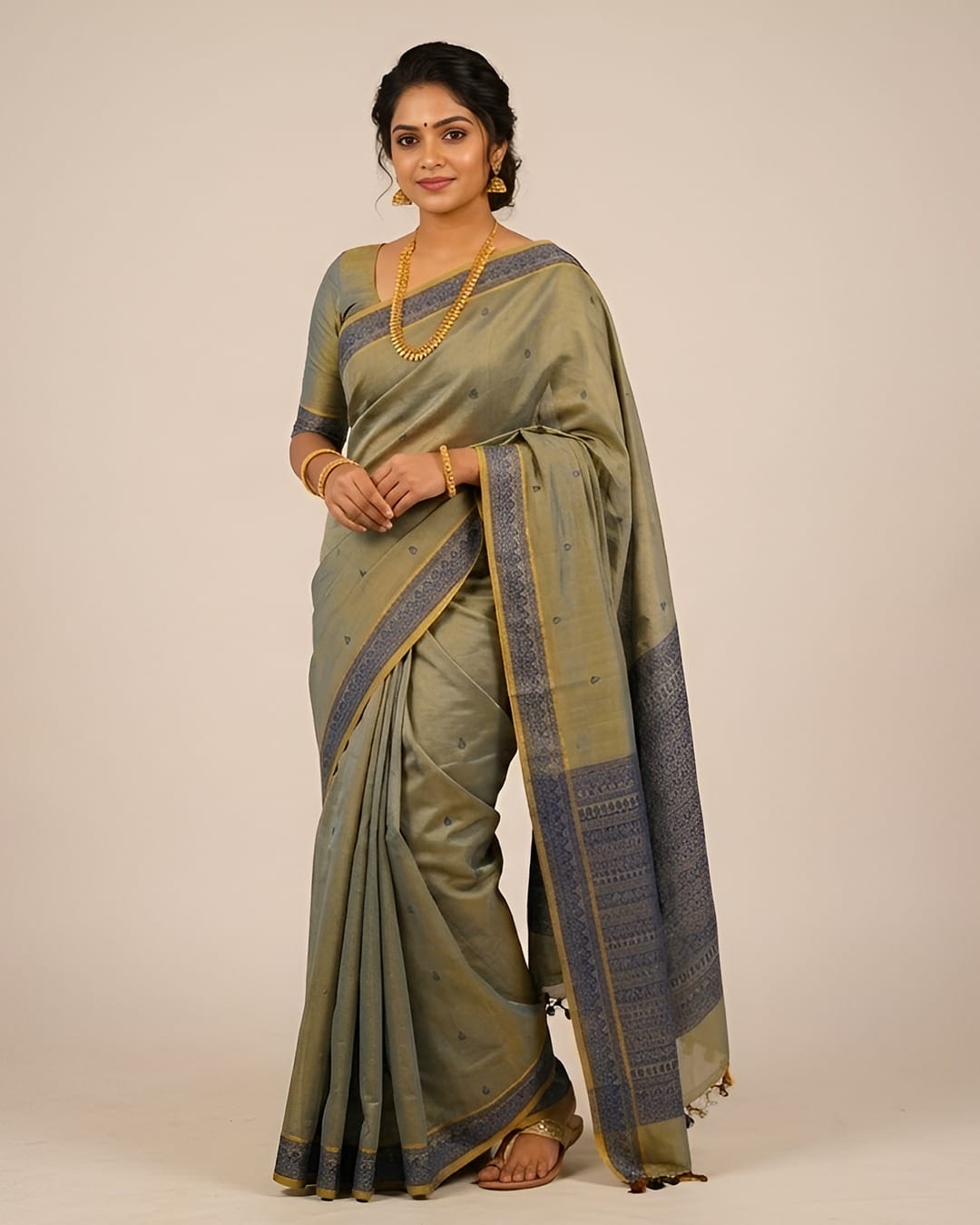
Try a softer palette, such as cream or beige, with a coloured border. The Madhubani in Tussar saree is a good example. It is pure Tussar silk in natural beige with a vermilion red border, and the page describes the border artwork as Madhubani-inspired.
Keep your jewellery light. Pre-pleat the saree if you can, so you are not fixing pleats between jobs.
Day 3, Lakshmi Puja (8 November): your main saree
This is the big day, and it usually has two parts. First comes the puja at home in the early evening, after sunset. Then come the lights, the sweets and the gathering or party. The exact puja time depends on your city, so check a local panchang.
Red is the colour many people reach for on Lakshmi Puja. Deep green, wine and gold are popular too.
For the puja at home, think comfort first. The Maheshwari Temple saree is a handloom Maheshwari silk cotton in vermilion red, with a mustard yellow pallu and gold zari buti. The page lists poojas among its occasions.
For the evening you may want something richer. The Wine Katan is pure Banarasi Katan silk in wine purple, with silver zari leaf butis. If you prefer green, look at Touch of Class, a green pure Katan silk saree with a Kadua weave from Banaras.
Rich silk with zari looks lovely in lamplight. It can also feel warm and heavy if you are cooking or hosting. If you are the one running around, wear the lighter saree for the puja and change for the evening.

Day 4, Govardhan Puja (10 November): calm and traditional
Govardhan Puja, also called Annakut, is usually a quieter day at home or at the temple. A calm, traditional look suits it.
Ivory and gold is a gentle choice after the colours of Lakshmi Puja. The Jija Mata Border saree is ivory silk with gold zari accents and a woven zari border. The page lists festive wear and temple visits among its occasions. Wear it with a coloured blouse if you want a little more life.
Day 5, Bhai Dooj (11 November): bright and cheerful
Bhai Dooj celebrates the bond between brothers and sisters. It is a day for family lunches, gifts and photographs, so it is a good day for a bolder colour.
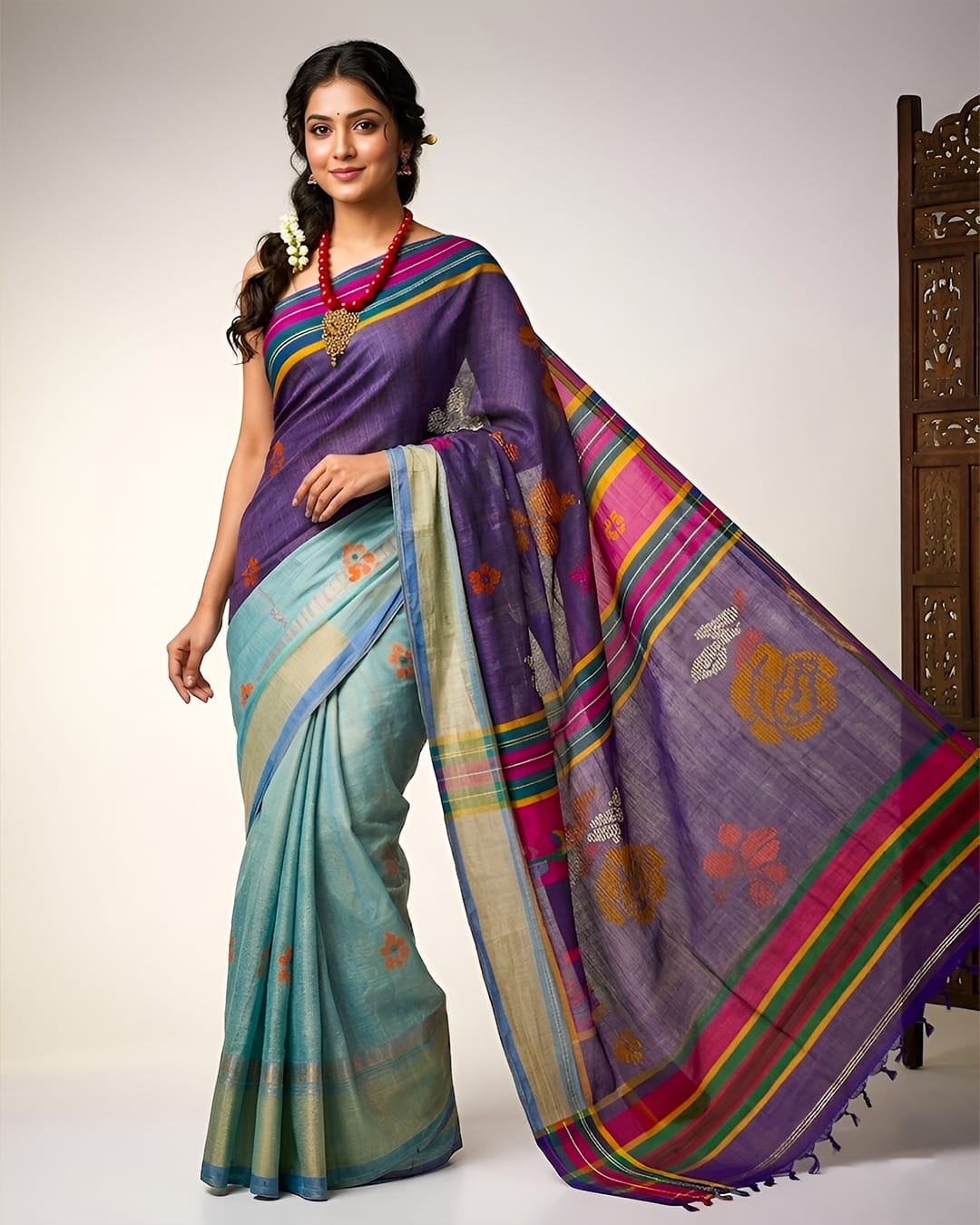
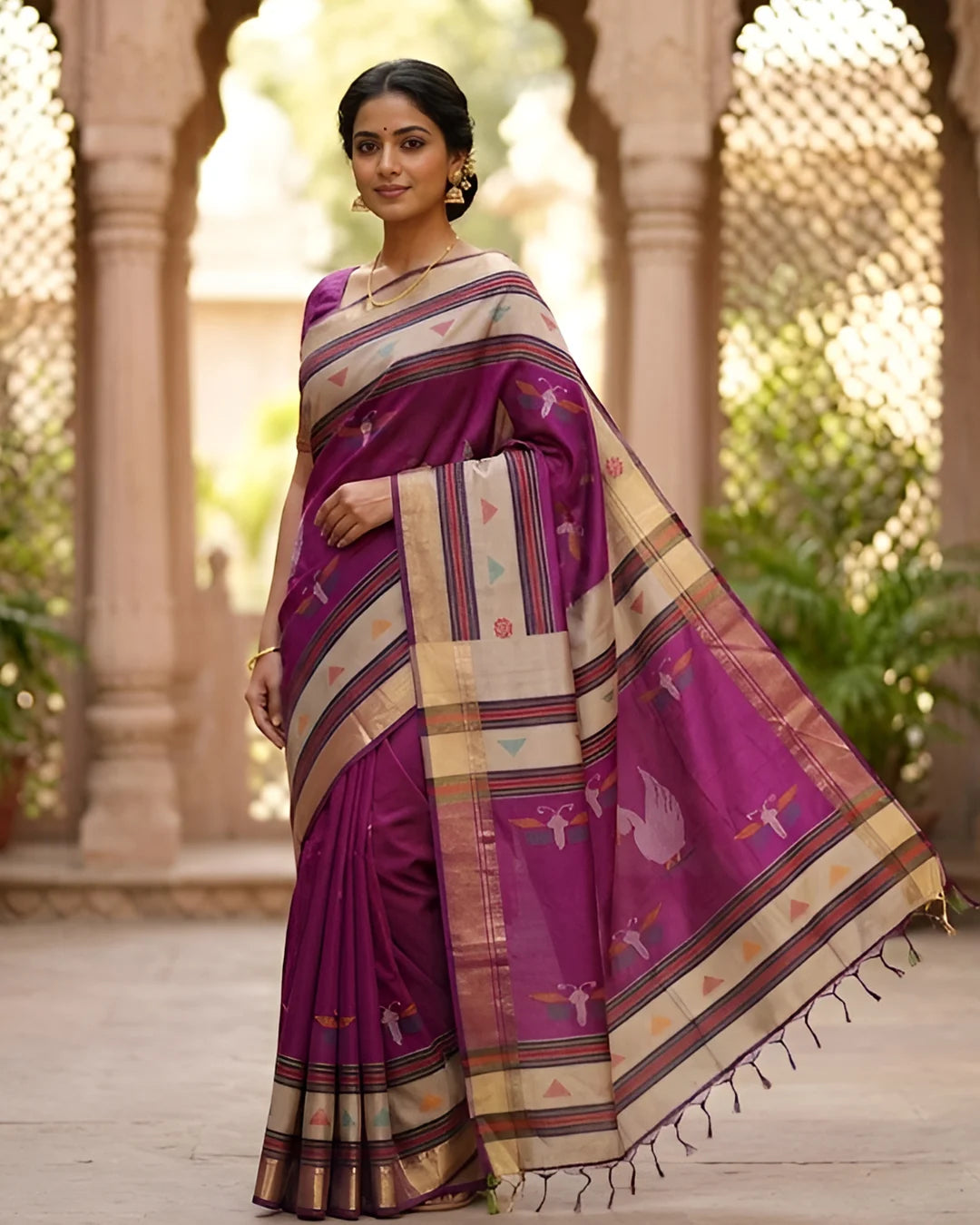
The Bawan Buti Ducks saree has a royal purple body with a silver grey pallu. It is pure handloom silk in the Bawan Buti weave from Bihar, and the page describes the motif as a swan. Keep the jewellery simple and let the saree do the talking.
Colours that work across all five days
There is no rulebook here. Still, a few shades come up again and again at Diwali:
- Red and maroon for Lakshmi Puja and evening looks.
- Gold, yellow and mustard for Dhanteras and daytime.
- Green and deep jewel tones, which look rich under lamps.
- Wine and purple for a deeper, more modern feel.
Pick the shades you love and that suit your skin. A colour you feel good in will always look better than one you chose only because it is the right one.
Which weave for which kind of day?
Not every saree suits every moment. Here is a simple guide.
| Weave | Often a good fit for |
| Katan silk (Banarasi) | Lakshmi Puja evening, parties, formal family gatherings |
| Chanderi | Dhanteras and daytime visits |
| Maheshwari silk cotton | Puja at home and family functions |
| Tussar silk | Daytime festive gatherings and cultural events |
| Bandhani | Festive lunches and family occasions |
Weight, zari and finish change from saree to saree, so check each product page. If you are not sure whether a saree is truly handloom, read our guide on how to tell handloom from powerloom.
Blouse, jewellery and bag: small changes, new look
One saree can work on two days if you change the details. Swap the blouse, change the jewellery and drape the pallu a different way. Nobody will think you wore the same thing.
For jewellery, the beads collection has beaded necklaces and necklace-and-earring sets in many colours. They sit well against plain sarees.
A small potli holds your phone, keys and lip balm without getting in the way. The potli bags at House of Sodesii are one place to look.
Practical tips for a long Diwali day
- Pre-pleat and pin your saree before guests arrive.
- Keep your pallu pinned and away from diyas, candles and sparklers.
- Wear shoes you can stand in for hours.
- Carry a stole or shawl. Late-autumn evenings can turn cool.
- Get your blouse stitched or altered early. If you order online, check the delivery estimate for your city and leave a few days spare.
- Eat something before you dress. It is a long evening.
Diwali saree FAQs
What colour saree should I wear for Diwali?
Red, gold, yellow, green and deep jewel tones are common choices. Pick one you feel good in.
Can I wear the same saree on two days?
Yes. Change the blouse, the jewellery and the way you drape the pallu.
Which saree is best for Lakshmi Puja at home?
One that is comfortable to sit in and easy to manage for hours. Many people choose red.
When is Diwali in 2026?
Diwali (Lakshmi Puja) is on Sunday, 8 November 2026. Dhanteras is on 6 November.
Start with the day that matters most
Diwali looks best when it feels good. Pick the saree for your most important day first, then build the rest around it. For more options, browse the festive handloom sarees and the Diwali Special collection at House of Sodesii.