Some things just stop you. You are at a wedding, mid-conversation, and someone walks past in a saree that catches the light a certain way and suddenly nothing else in the room matters. That happens a lot with India's most beautiful handloom weaves. Not because they are loud or showy. Actually, the best ones rarely are. It is something quieter than that, a sense that what you are looking at took real time, real hands, and real skill to make.
These are not factory fabrics. Each one comes from a specific town, a particular community of weavers, a tradition that in some cases goes back six or seven hundred years. And every single one of them is still being made today, by people who learned the craft from their parents, who learned it from theirs.
This guide is our attempt to introduce six of the most remarkable of these weaves, where they come from, what makes each one genuinely different, and why they are worth knowing. Whether you own a dozen handloom sarees already or you are trying to figure out what to buy first, there is something here for you.
Region by Region: Six Weaves That Have Stood the Test of Time
India is a big place and its handloom traditions reflect that in the best way. You cannot really put them all in the same sentence without losing something. The weavers of Varanasi are doing something completely different from the weavers of Kanchipuram, who are doing something completely different again from the families working in Maheshwar. Different raw materials, different looms, different motifs, different everything. So let us take them one at a time.
VARANASI, UTTAR PRADESH
Banarasi Silk: Six Hundred Years and Still the One
If you ask almost anyone to name an Indian weave, Banarasi comes up first. And that makes sense. This silk has been coming out of Varanasi for at least six centuries, and in that time it has not needed a rebrand. It is still the first choice for brides across the country. It is still what families pull out of steel trunks for the most important occasions.
What you are actually looking at when you look at a Banarasi is gold or silver zari woven directly into silk to create flowers, paisleys, fine jali grids, creeping vines, and all kinds of other patterns depending on the region of Varanasi where it was made. A simpler design might take two weeks. A detailed one can take a single weaver several months.
The most respected variety is katan silk, where the yarn is twisted tightly before weaving to give the fabric its characteristic weight and gleam. Katan Banarasis carry a GI tag, so when you buy one from a verified source, you know exactly what you are getting
KANCHIPURAM, TAMIL NADU
Kanjivaram: The One That Gets Better With Age
Down in Tamil Nadu, the Kanjivaram is doing its own thing entirely. Pure mulberry silk, bold colours, and motifs that come straight out of South Indian temple architecture. Peacocks, temple towers, checks, mango butis. If a Banarasi is intricate and delicate, a Kanjivaram is bold and declarative. Both are right. They are just different.
The detail that makes Kanjivaram technically fascinating is the korvai technique. The body and border of the saree are woven separately on two different beams and then interlocked by hand during weaving. That join is so tight that the border will not separate even after years of hard use. That is not a selling point, it is just how they are made.
A good Kanjivaram is genuinely an heirloom piece. The silk softens slightly over time without losing its structure, and the Zari holds. Some families have Kanjivarams that are four or five decades old and still being worn at weddings. You do not throw these away.
CHANDERI, MADHYA PRADESH
Chanderi: Light Enough to See Through, Strong Enough to Last
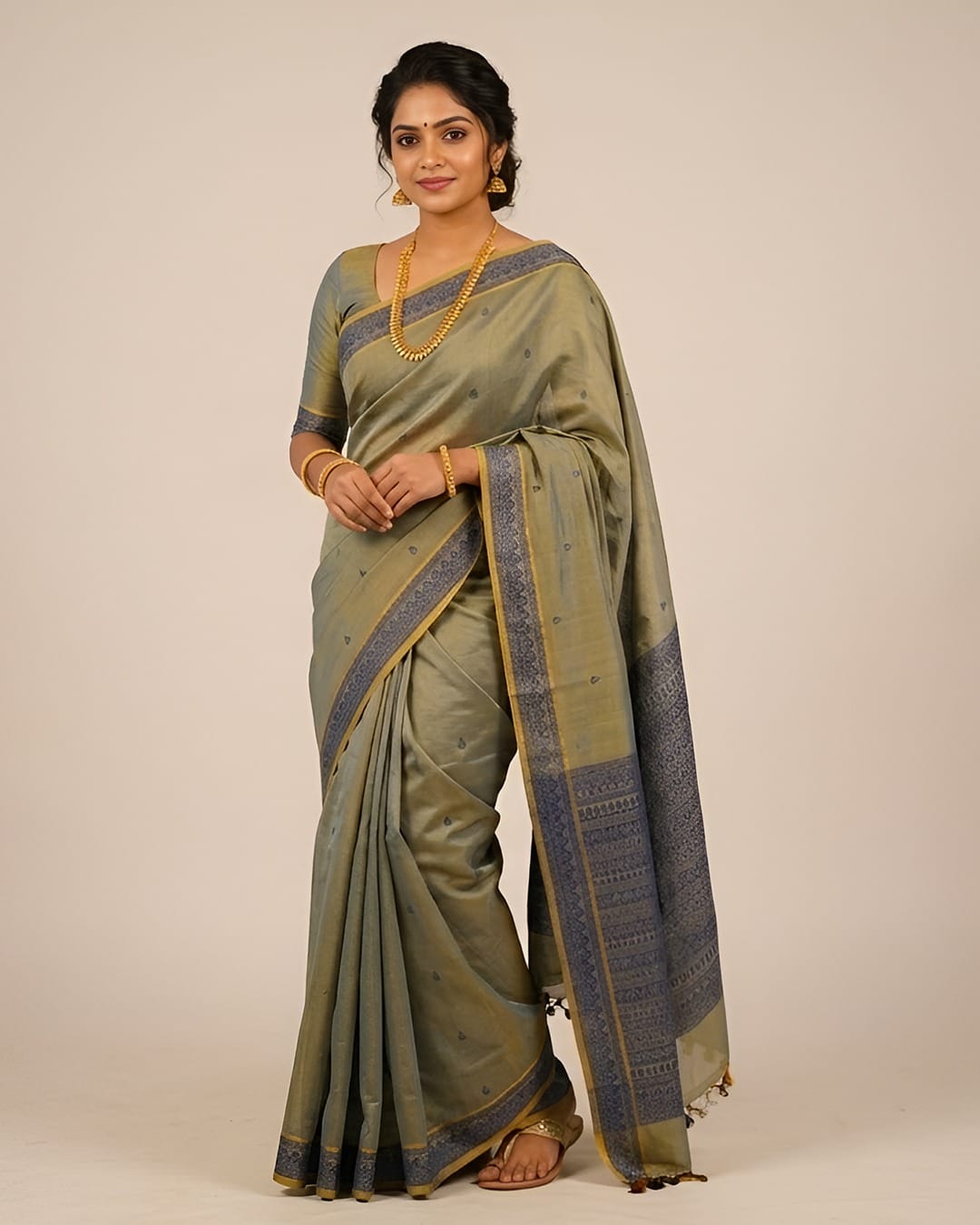
Chanderi is the kind of fabric that surprises people when they first hold it. It is so light it feels almost irresponsible. Hold it up to a window and it is practically translucent. The town it comes from, Chanderi in Madhya Pradesh, is small and not especially well known, which makes it a bit of a hidden gem even among people who know Indian textiles.
The weave uses silk and cotton together, and the ratio of the two affects how the fabric drapes and how sheer it ends up being. Pure silk Chanderi is the most translucent. Silk-cotton blends sit somewhere in between and are often the more practical choice if you actually plan to wear it regularly rather than saving it.
The motifs on Chanderi tend to be small and scattered, coin-shaped butis called ashrafi, tiny peacocks, geometric dots. Nothing that competes with the fabric itself. And the pallav is usually where you get the most concentrated pattern work. It travels easily, does not need much ironing, and honestly works for almost everything.
MAHESHWAR, MADHYA PRADESH
Maheshwari: The Practical One With an Interesting Past
The story behind Maheshwari is one of the better ones in Indian textile history. These sarees were originally commissioned by Queen Ahilyabai Holkar of the Maratha empire for the weavers she brought to her court town on the banks of the Narmada. That was in the 18th century. The tradition has kept going ever since from that same small town.
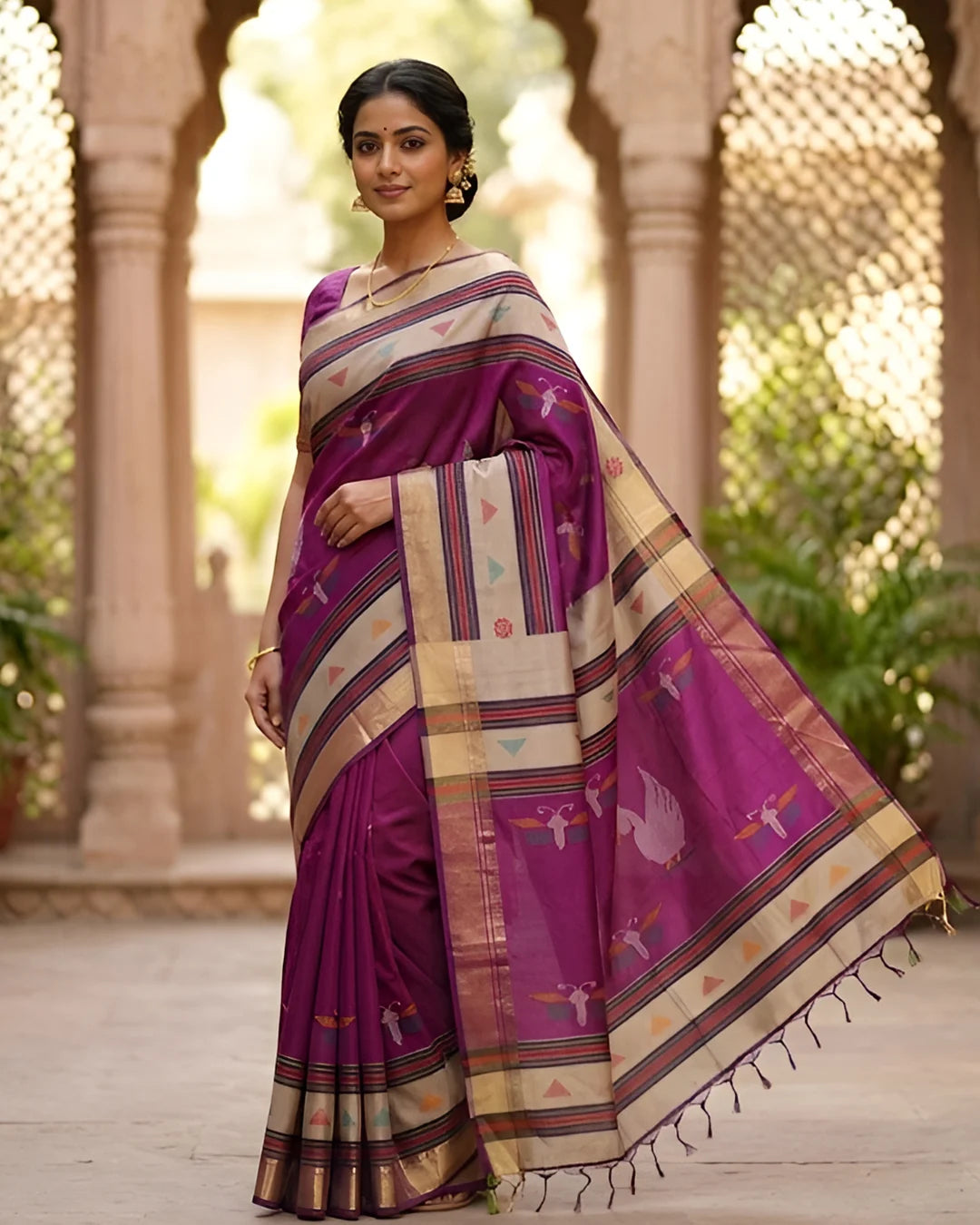
What makes Maheshwari genuinely different from most handloom sarees is the border. It is woven separately and reversible, meaning both sides are clean and finished. You can flip it and it looks equally intentional. That is harder to do than it sounds and it is one of the things that separates a real Maheshwari from an imitation.
The silk-cotton blend is practical in a way that pure silk is not. It breathes well, sits comfortably in warmer weather, and does not require the same level of careful handling. You can wear it to work, to a lunch, to a festival, to a friend's wedding. It is probably the most genuinely wearable saree on this list. We have a full Maheshwari collection at HOS if you want to see what the different stripe and check patterns actually look like.
BHOODAN POCHAMPALLY, TELANGANA
Pochampally Ikat: The Blur is the Point
Most weaves work by putting design into thread as you weave. Ikat does not. In Ikat, the threads are tied off and dyed in precise patterns before they ever touch the loom. When you eventually weave them, those patterns have to align correctly or the whole thing falls apart. It is technically demanding in a way that most other weaves simply are not.
The result is those distinctive bold geometric designs with slightly blurry edges. That blur is not a mistake or a sign of poor quality. It is actually how you know it is real Ikat and not something printed to look like it. A machine-printed Ikat-pattern fabric will have perfectly sharp edges. Real Ikat will not.
Pochampally in Telangana is the most well-known Ikat centre in India and the patterns coming from there tend to be bold, graphic, and quite contemporary-looking without trying to be. It works well in cotton for everyday wear and in silk for occasions.
WEST BENGAL
Jamdani Muslin: Possibly the Most Technically Impressive Weave in the Country
Jamdani is the one that consistently surprises people who do not know it. UNESCO has recognised it as an Intangible Cultural Heritage of Humanity, which gives you some sense of how significant the weaving community considers it internationally. But reputation aside, the fabric itself earns that recognition.
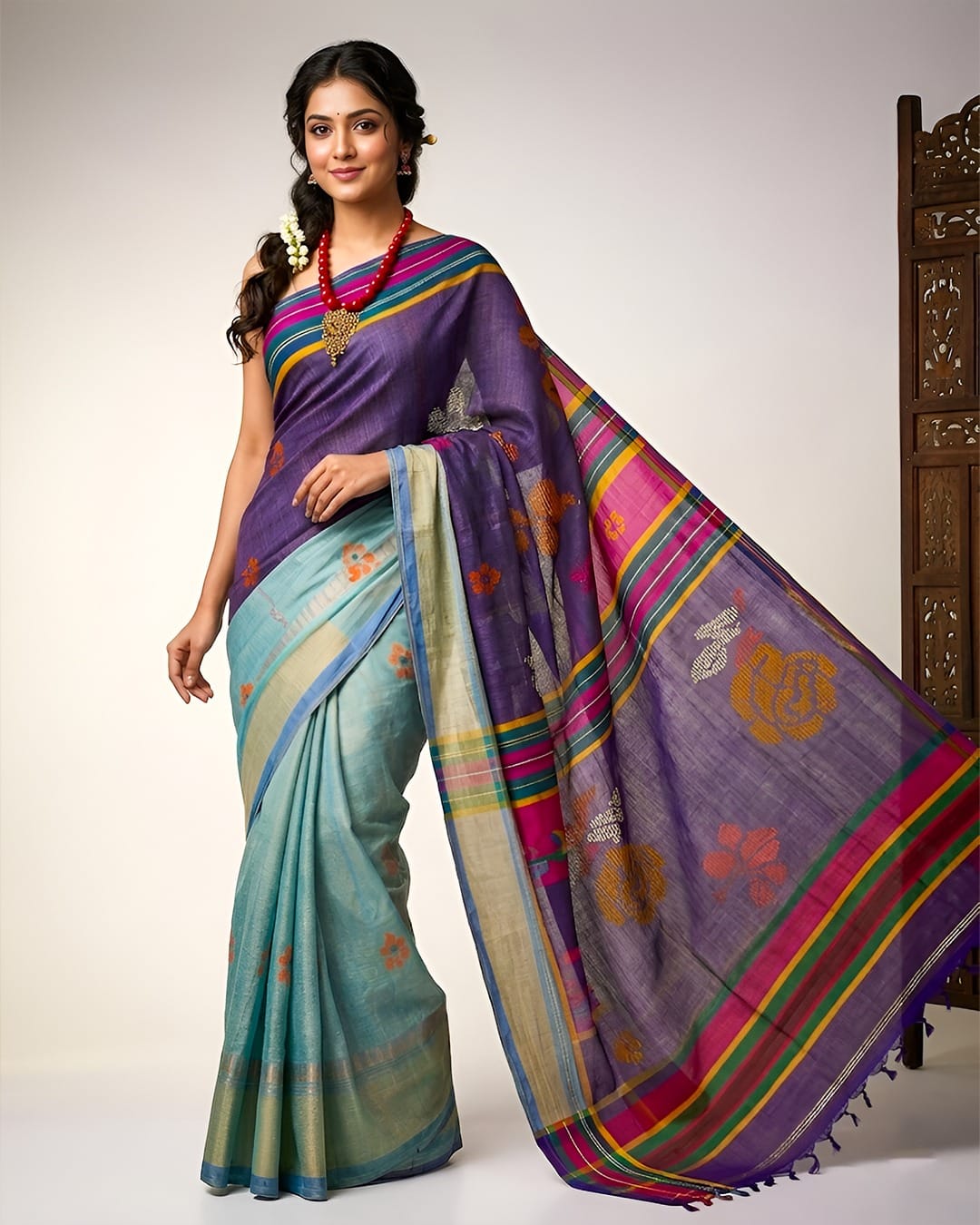
It is woven on very fine muslin, sometimes so fine it was historically compared to running water. The motifs, which are almost always floral, appear to float on the surface of the cloth. They are not printed. They are not embroidered afterwards. They are introduced through a separate supplementary thread during the weaving process itself, which means the weaver is making design decisions on the loom, in real time, one line at a time.
It is slow work. A single saree length can take weeks. But when you see one in good light, with those flowers appearing to hover just above the surface of the fabric, the reason for the effort becomes obvious.
So What Actually Makes Handloom Different?
Power-loom fabric has gotten quite good at looking like handloom from a distance. Fair warning. The gap has narrowed in the last decade and there are producers doing a convincing job of mimicking the surface appearance. So it is worth knowing what to look for if authenticity matters to you.
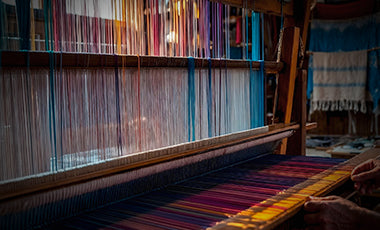
On a handloom, every throw of the weft thread is done by a person. That creates natural variation across the weave, tiny irregularities that accumulate into a texture that machine-made fabric simply cannot replicate. Handloom fabric also tends to breathe differently. It moves with the body instead of sitting on it. And it usually gets better with wear rather than worse.
From a buying perspective: look for the Handloom Mark on the tag, which is the government certification for handloom-woven fabric. GI-tagged weaves have a separate certificate. And for most of the weaves on this list, buying from a trusted source that works directly with weavers is the most reliable guarantee you will get. That is how we work at House of Sodesii.
The Six Weaves at a Glance
| Weave | State | Fabric | GI Tag | Best for |
| Banarasi Silk | Uttar Pradesh | Silk + Zari | Yes | Weddings, special occasions |
| Kanjivaram | Tamil Nadu | Pure Mulberry Silk | Yes | Weddings, temple visits |
| Chanderi | Madhya Pradesh | Silk-Cotton | Yes | Summers, daily, functions |
| Maheshwari | Madhya Pradesh | Silk-Cotton | Yes | Work, travel, everyday |
| Pochampally Ikat | Telangana | Cotton or Silk | Yes | Casual, office, festivals |
| Jamdani Muslin | West Bengal | Fine Cotton | Yes | Occasions, statement wear |
Questions People Actually Ask
Which handloom saree is the most expensive?
Banarasi silk and Kanjivaram are generally at the top because of the real silk and zari involved. A detailed Banarasi can take one weaver several months to complete, which is reflected in the price. That said, a pure silk Chanderi or a fine Jamdani from a skilled weaver can also command serious prices.
One Last Thing
India's most beautiful handloom weaves have stayed relevant for one simple reason. People keep choosing them. Not out of nostalgia and not because they feel obligated to. Because when you actually own one of these sarees, you understand quickly why the tradition has lasted. The fabric is better. The craft is real. And wearing it is its own kind of statement.
Every saree you buy from a weaving community keeps a weaver at their loom. That might sound like a line, but it is just true. The tradition continues because people purchase it. So if you have been thinking about buying your first handloom saree or adding to what you already have, this is as good a time as any.