Duplicate sarees are a real, growing problem — and most buyers have no way of telling the difference. We asked our weaving partner directly how they spot a fake, and the answer was more specific than we expected.
Look at the loose threads at the edge
Genuine handloom often leaves small loop-like threads (phande) at the finishing edge — a natural byproduct of how the fabric is cut and completed by hand. Duplicate sarees increasingly try to imitate this by leaving similar-looking loose threads at the bottom seal — but a trained eye can tell the difference immediately from how those threads are formed and cut.
Check the zari thread itself — thickness matters
Real zari thread has a distinct thickness and texture. Duplicate versions often use a thinner substitute thread that looks similar at a glance but feels noticeably different once you know what to compare it against. Genuine zari is a heavier, more substantial thread; imitation zari tends to run thin.
Feel the fabric — soft versus stiff
There's a tactile difference too. Genuine handloom fabric feels notably soft; duplicate or machine-made alternatives tend to feel stiffer, more rigid. It's subtle, but once you've felt both side by side, it becomes obvious — some customers pick up on it instantly, while others need it pointed out.
The strongest test: does the thread break?
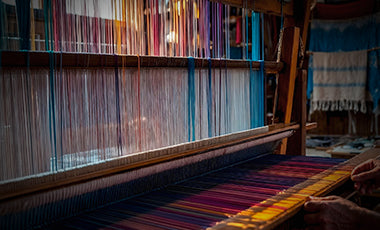
This is the most telling sign of all. Genuine silk thread, according to our partner, doesn't break easily during weaving. Weaker or synthetic-blend threads used in duplicates tend to snap mid-weave — and when that happens, it actually creates a visible flaw: a small gap in the weave that has to be manually repaired by pulling a thread from elsewhere and rejoining it at the break point.
That repair itself is a quiet giveaway. A genuine handloom saree, woven with proper silk thread, simply doesn't require that kind of mid-process patching nearly as often.
Why this is worth knowing
Our partner was candid about how widespread the problem has become: duplicate sarees are increasingly common in the market, and many customers buy them without realizing it — genuinely believing they're getting the real thing. Some buyers can tell the difference instinctively. Most can't, simply because no one has ever shown them what to actually look for.
That's exactly why we're sharing this. Knowing these four checks — the finishing threads, the zari thickness, the fabric's feel, and the thread's strength — is the simplest way to buy with real confidence, whether you're buying from us or anywhere else.