Most of us have a story like this. You see a gorgeous silk saree on a website. The photos are perfect, the colour is exactly what you wanted, and the price looks almost too good. The parcel arrives, and the fabric feels flat, shiny and a little plasticky. It looks nothing like the picture.
Buying handloom silk sarees online does not have to feel like a gamble. The trick is to stop asking "which website is best?" and start asking "what does a trustworthy store actually show me?" Once you know that, you can judge any store in about ten minutes.
The short answer: the best online store for handloom silk sarees is one that tells you who wove the saree and where, names the yarn and weave, backs its claims with recognised marks where they apply, shows the saree clearly from several angles, and has a plain, fair return policy.
What handloom silk saree should really mean
Two separate promises hide inside this phrase, and shops often blur them.
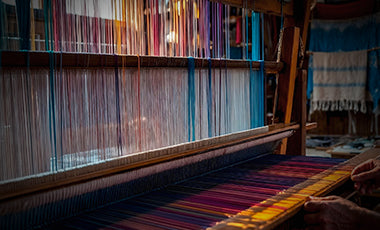
- Handloom is about how the cloth is woven. Under India's Handlooms (Reservation of Articles for Production) Act, 1985, a handloom is "any loom, other than powerloom". In everyday words, it is a loom worked by hand, not driven by electric power.
- Silk is about what the yarn is. Real silk is a natural protein fibre. Look-alikes such as art silk or polyester blends can be shiny, but they are not silk.
A saree can be handloom and not pure silk. It can also be pure silk and woven on a power loom. A good store is honest about both halves. If a listing says only "silk saree" or "handloom look", you have learned very little.
This matters beyond fashion. The Fourth All India Handloom Census (2019-20), as cited in an IIT BHU research thesis, counted roughly 35 lakh actively engaged weavers, most of them in rural areas. A genuine handloom purchase puts money into those households. A look-alike does not.
The 6 checks to run on any handloom silk saree store
Keep this list handy. It works for a big brand, a small boutique or an Instagram seller.
1. Does it name the weave and the origin?
Banarasi katan silk from Varanasi" or "Bhagalpuri tussar" tells you far more than "festive silk saree".
2. Does it state the yarn clearly?
Look for "pure silk", "silk cotton" or "tussar silk" in the product details, not just the title. Phrases like "tussar look" or "silk feel" are warning signs.
3. Does it use recognised marks, and for which saree?
The Silk Mark is a certification for pure natural silk, run by the Silk Mark Organisation of India under the Central Silk Board. The Handloom Mark is a government scheme run through the Textiles Committee to authenticate handloom products. GI tags apply to specific regional weaves. A claim on the homepage is not enough. Check the product page of the saree you want.
4. Can you see the saree properly?
Several angles, the pallu, the border and the reverse side. A store that offers a video call on request is showing confidence.
5. Is the price believable?
Hand-weaving silk takes days or weeks. A "handloom pure silk" saree at a fraction of the usual price deserves suspicion.
6. Will someone answer questions?
Message the store a simple question, such as "Which loom is this woven on?" A clear reply is a good sign.
Types of online stores and what to watch for in each
|
Store type |
Good for |
Watch for |
|
Weaver-direct brand sites |
Clear sourcing stories, smaller batches |
Check that origin claims match the product page |
|
Curated multi-weave brands |
Wide choice across regions, easy returns |
Handloom and power loom may both be sold; read each listing |
|
Artisan marketplaces |
Variety from many sellers |
Quality depends on the individual seller; check each one |
|
State handloom corporations and cooperatives |
Institutional sourcing |
Websites may be slower and have a smaller range |
|
General e-commerce platforms |
Price comparison |
Very high chance of "silk-look" or power-loom items sold under handloom keywords |
None of these types is automatically good or bad. What counts is how much information each listing gives you.
A few places to start, and what each says about itself
We are a brand ourselves, so please treat this section as a starting list, not a ranking. Everything below is what each store states publicly. Verify it before you buy.
- HMR Handlooms (Varanasi) says it provides Handloom, Silk Mark and GI certifications with its Banarasi sarees.
- WeaverStory publishes buyer guides that tell shoppers to look for Silk Mark or Craftmark where applicable.
- Mavuri's publishes its own guides on telling real handloom from fake and on identifying tussar.
- Taneira lists shipping and return terms on its handloom saree page.
- Gaatha describes its range as original handloom sarees from across India, including Maheshwari, Ajrakh, Patola and Chanderi.
Where House of Sodesii fits
House of Sodesii is a premium brand started by Preeti Juneja, built around travelling to weaving regions and sourcing sarees from weavers and their families. Here is what we say on our own site, so you can hold us to it:
- All products are sourced directly from weavers.
- We show 4-5 pictures of the same saree from different angles, and we are happy to do a video call to show you the actual piece.
- Sarees carry a GI tag, Silk Mark or Handloom Mark. The product page tells you which.
- We have two stores in Noida and Ghaziabad, open for visits by appointment. We offer shipping across India, with free shipping on all orders above ₹5,000.
Do not take our word for it any more than anyone else's. Use the seven checks above on us too.
Which silk should you look at first?
Knowing a few silk names makes your search sharper.
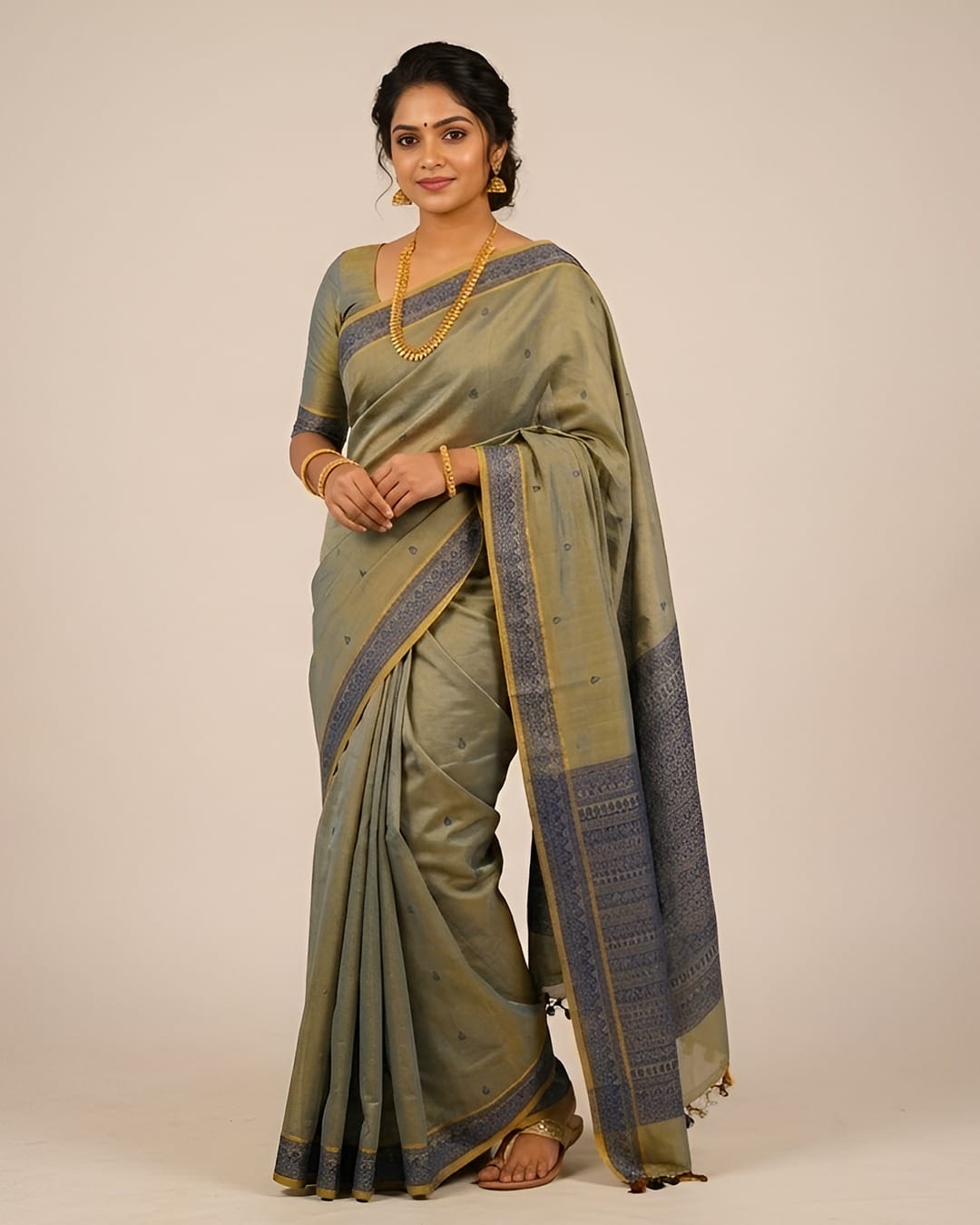
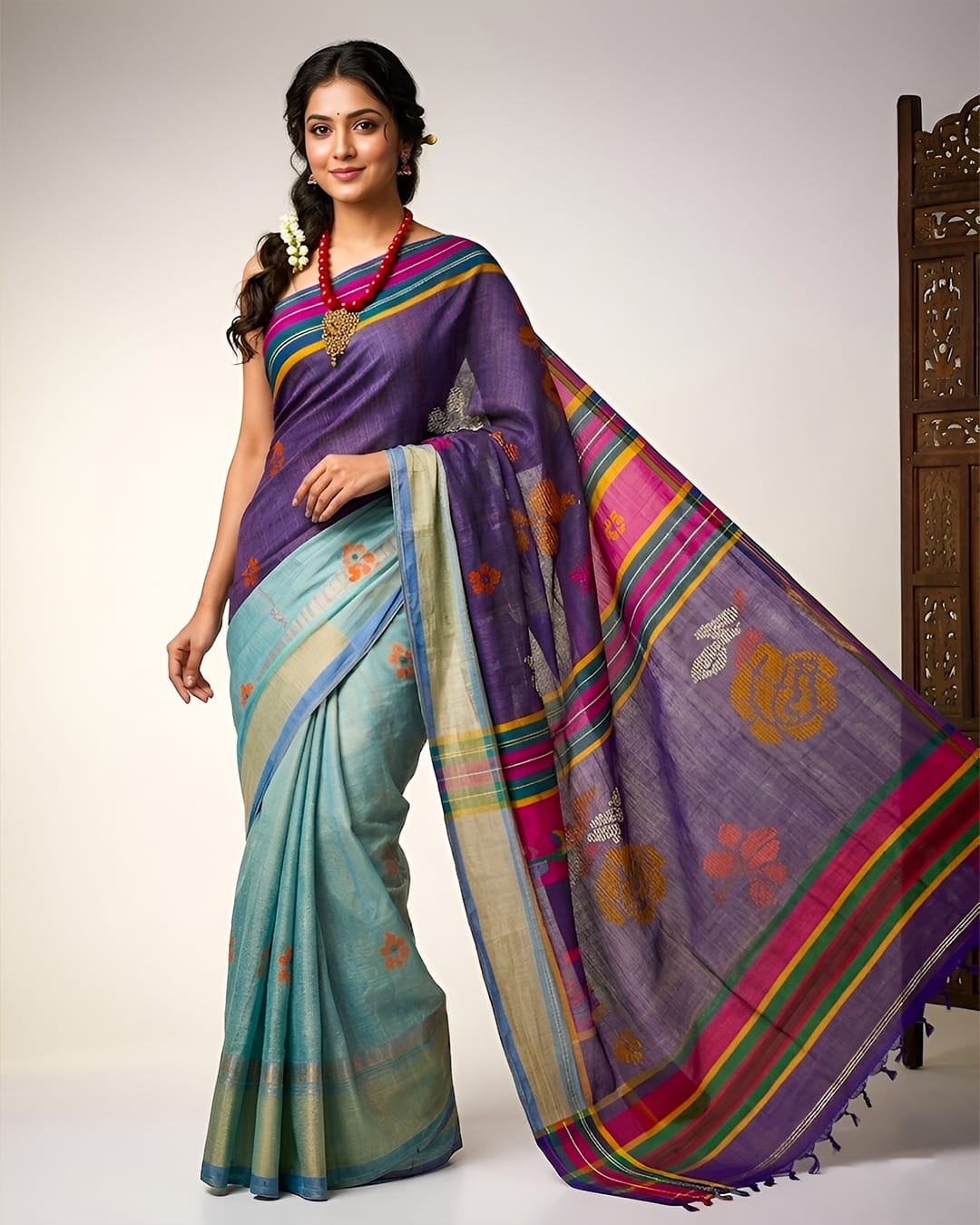
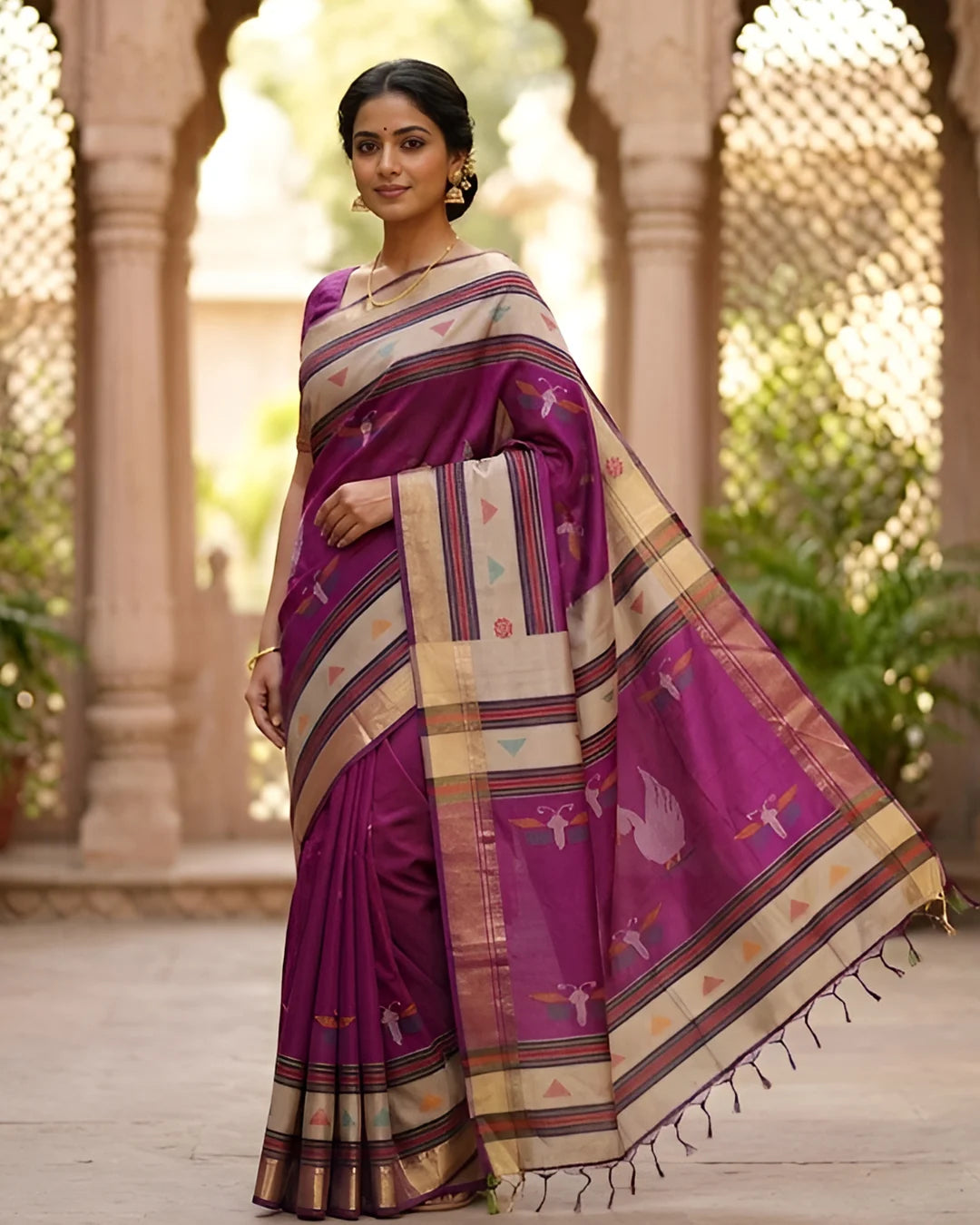
- Katan silk is the pure silk used in Banarasi weaving, known for a soft sheen and a rich drape. See our katan silk sarees.
- Tussar silk comes from wild silkworms and has a textured, matte, golden look. It suits day events and summer festivals. See our handloom tussar silk sarees.
-
Pure silk in general covers many weaves from many states. Browse our handloom pure silk sarees to compare them side by side.
A quick example of the checks in action
Say you find a "pure handloom silk saree" at a very low price. Run the list. The listing names no weave or region, shows two photos, mentions no marks and has no return policy. That is four failed checks out of seven, and you can walk away in under a minute. Now picture a listing that names the weave, shows the border and back, states the yarn, and answers your question within a day. That is the store worth your time.
A last word before you click "buy"
Take your time. A good handloom silk saree is something you may wear for decades, and sometimes pass on. Spend ten minutes on the checks, save the product page, ask one question, and only then pay.
If you are still not sure, write to us. We would rather answer ten questions than ship one regret. When you are ready, explore the full handloom saree collection.
FAQ
Which is the best online store to buy handloom silk sarees?
There is no single best store. Choose one that names the weave and origin, states the yarn, shows the saree from several angles, uses recognised marks where applicable, and has a clear return policy.
How can I tell if a handloom silk saree is genuine online?
Check the product page for the yarn, weave and origin, ask for close-up photos or a video call, look for Silk Mark and Handloom Mark details, and be wary of prices far below normal.
What does the Silk Mark prove?
The Silk Mark is a certification that a textile is made of pure natural silk. It is advisory, not a legal requirement, and it does not by itself prove the saree is handloom-woven.
What is the difference between handloom silk and power loom silk?
Handloom silk is woven on a loom operated by hand. Power loom silk is woven on an electric-powered loom, which is faster and gives more uniform results. Both can use real silk yarn.
Is a very cheap "handloom silk saree" likely to be real?
Usually not. Hand-weaving silk is slow and the yarn is costly, so unusually low prices are a reason to ask more questions.
Can I return a handloom silk saree bought online?
It depends on the store. Always read the return and exchange policy before paying, and note that small irregularities in a handloom saree are normal and are not defects.
Does House of Sodesii offer a video call before purchase?
Yes. Our FAQ says we encourage a video call to show the actual product, and you can also message us on WhatsApp.