Here is a problem many working women know well. You want a saree that looks put together in a meeting, survives a long commute, and still feels like you at the evening dinner. Pure silk feels too heavy for the day. A plain cotton feels too casual for the occasion. What sits in between?
That in-between space is where handloom silk cotton sarees shine, and it is also where confusion creeps in. Shops use words like "silk cotton", "cotton silk", "khadi silk" and "pure cotton" almost interchangeably. This guide sorts them out so you can pick with confidence.
Pure handloom cotton: the everyday classic
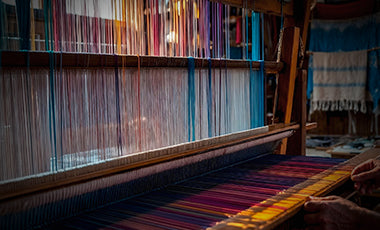
A handloom cotton saree is woven by hand from cotton yarn. Its biggest strengths are comfort and breathability, which is why it is the go-to for hot, humid days and long hours of wear.
Good for: daily wear, office, summer, travel, and anyone who wants low-maintenance elegance.
Keep in mind:
- Pure cotton may shrink slightly on the first wash, so gentle hand washing or dry cleaning.
- Colours can bleed in early washes. Wash separately in cold water.
- Cotton wrinkles more easily than silk blends. A little starch helps if you like a crisp drape.
Browse our pure cotton handloom sarees if you want to feel the difference.
Handloom silk cotton sarees: the best of both
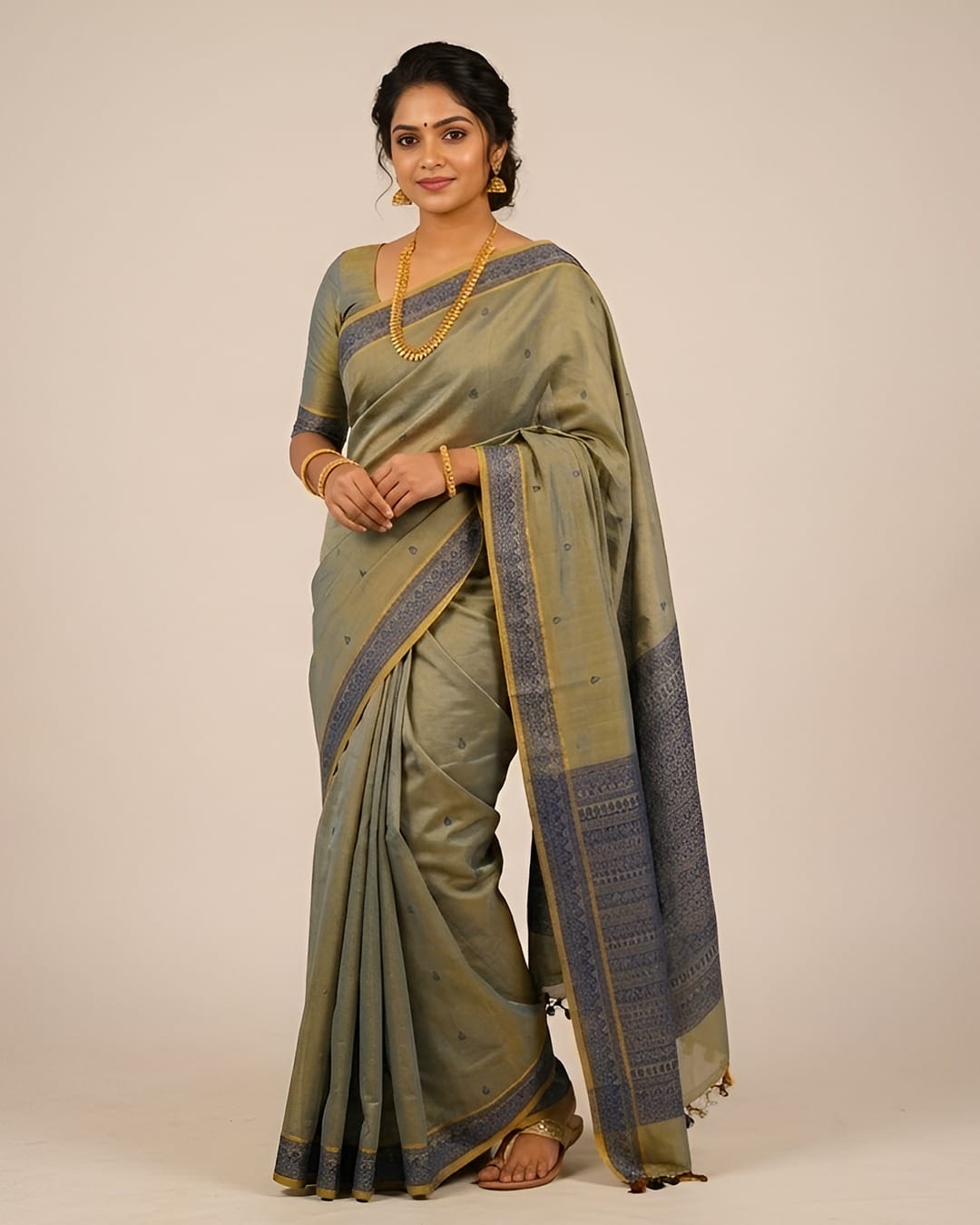
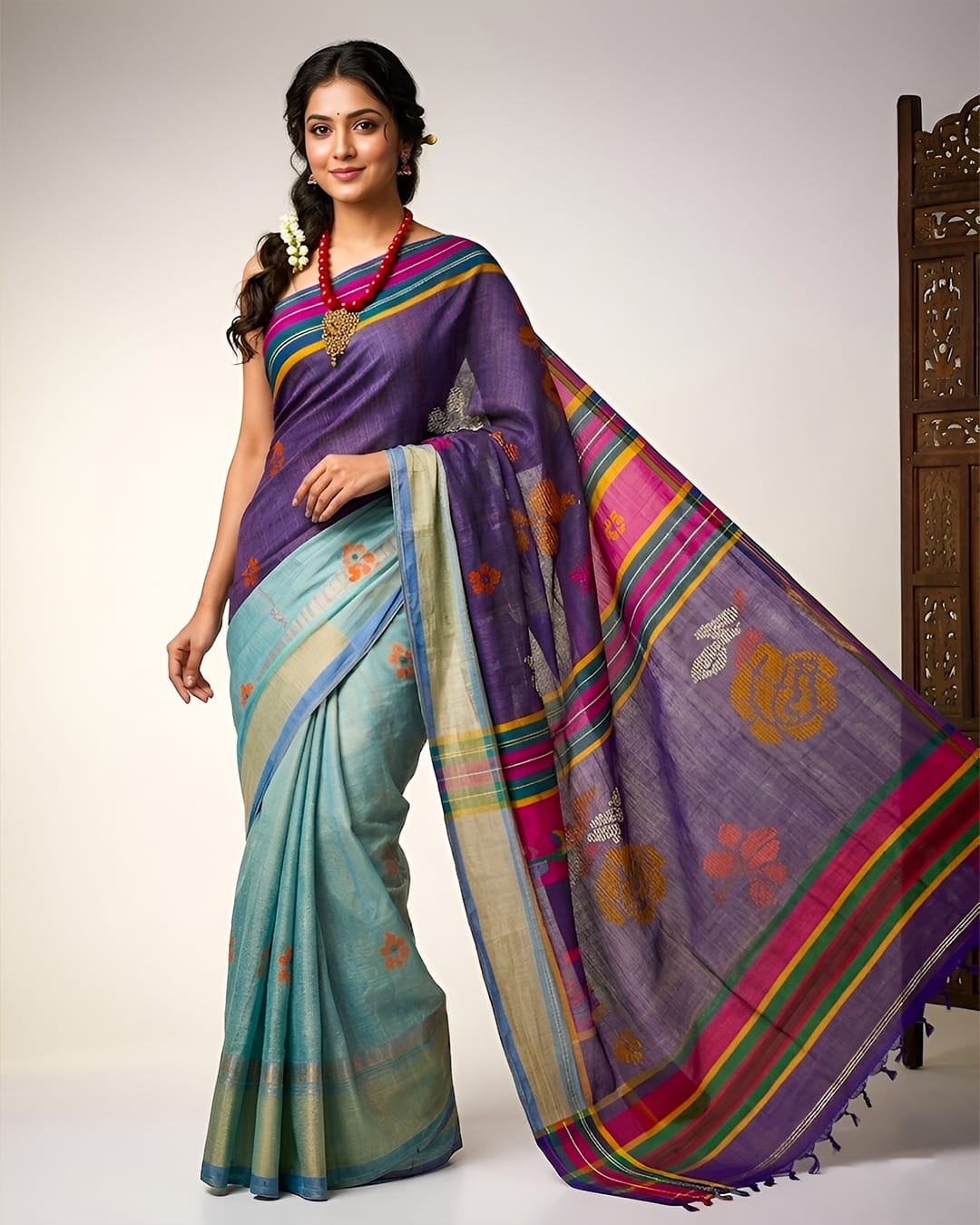
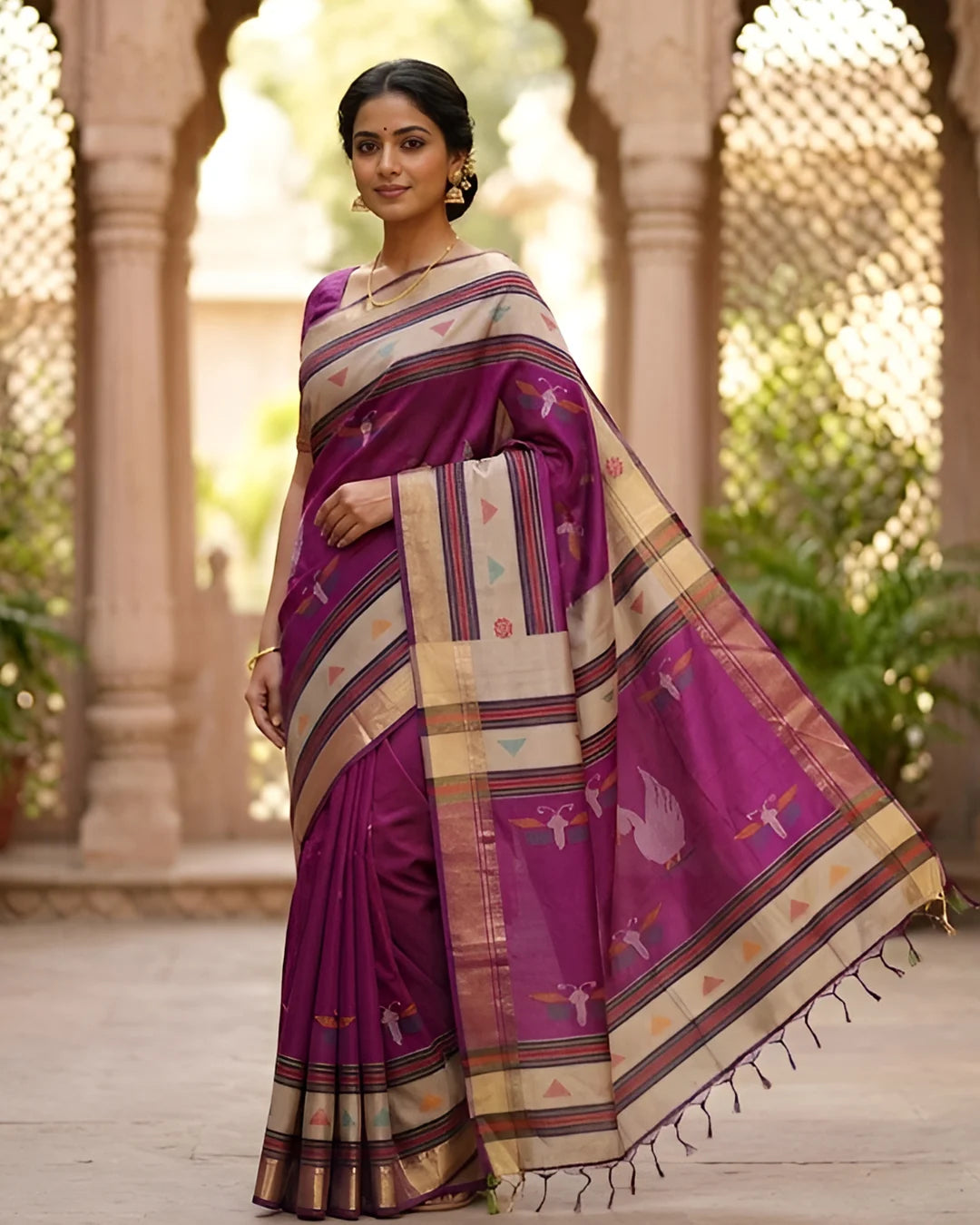
A silk cotton saree combines silk and cotton yarns in the same cloth. Sellers generally describe the result as having some of silk's sheen and smoothness along with cotton's comfort and breathability.
Several well-known Indian weaves are built on this idea:
- Chanderi from Madhya Pradesh is made in three fabric types: pure silk, Chanderi cotton and silk cotton. Light and sheer, it is a favourite for summer and semi-formal wear.
- Maheshwari sarees, from Maheshwar in Madhya Pradesh, are a blend of silk and cotton, known for reversible pallus and narrow borders. Our FAQ describes them as lightweight and suited to daily wear.
-
Kota Doria from Rajasthan blends cotton and silk, giving a transparent, airy cloth that is popular in summer.
Good for: office, day functions, festive lunches, and anyone who wants a dressy look without silk's weight.
Keep in mind:
- "Silk cotton" is not a fixed recipe. The proportion of silk to cotton changes from piece to piece. A sensible store tells you the yarn composition. If it does not, ask.
- Some sarees use silk only in the border or the pallu, with a cotton body. That is a valid and beautiful design, but you should know what you are buying.
- Hand wash gently or dry-clean. Avoid hard scrubbing, which can dull the silk.
You can see the range in our silk by cotton sarees and our Chanderi collection.
Khadi silk: what does it really mean?
This is the most confusing term of the three, so let's slow down.
Khadi is not a fibre. It is a process. As explained by Charkha Tales, khadi is hand-spun and hand-woven cloth, and it can be made from cotton, silk or wool. The yarn is spun on a charkha (spinning wheel) and then woven on a handloom. As a TTEF guide puts it, all khadi is made on a handloom, but not all handloom textiles are khadi, because mill-spun yarn can also be woven on a handloom.
So a "khadi silk saree" should mean: a saree where the silk yarn is hand-spun and the cloth is hand-woven. The result tends to have a slubby, textured, natural look.
But be careful. In the market, "khadi silk" is sometimes used loosely for any silk with a rustic, textured feel. To avoid disappointment:
- Ask: is the yarn hand-spun, and is it silk or a silk blend?
- Ask: is the saree handloom-woven?
- Ask what other fibres are in it.
Good for: women who like a textured, earthy, artisanal look, and for people who value the hand-spun story.
Keep in mind:
It can feel coarser than smooth silks and may be priced higher because hand-spinning is slow. Treat it gently and dry-clean when in doubt.
Quick comparison
|
|
Pure handloom cotton |
Handloom silk cotton |
Khadi silk |
|
Feel |
Soft, breathable |
Smooth with a light sheen |
Textured, slubby |
|
Weight |
Light to medium |
Light to medium |
Medium |
|
Best season |
Summer, monsoon |
Most seasons |
Cooler to moderate weather |
|
Best for |
Daily wear, office |
Office, day functions, festivals |
Artisanal or casual-dressy looks |
|
Care |
Hand wash, expect some softening |
Gentle wash or dry-clean |
Dry-clean preferred |
|
Ask the seller |
Yarn count, weave |
Silk to cotton ratio |
Hand-spun? Handloom? Fibre content? |
How to choose in three questions
1. Where will you wear it?
Long hours in a warm office favour cotton or silk cotton. A family function favours silk cotton with a zari border.
2. How much care are you ready for?
Cotton is the easiest. Silk blends and khadi silk want gentler handling.
3. What look do you love?
Crisp and simple, soft and shiny, or earthy and textured?
If you like variety, a small wardrobe plan works well: two pure cotton sarees for daily use, one or two silk cotton sarees for dressier days, and one khadi or tussar piece for statement moments.
How to style each one
Fabric sets the mood, so style with it rather than against it.
- Pure cotton: Keep the look clean. A fitted cotton or silk-blend blouse, minimal jewellery and a neat, pinned drape suit a long working day. Starching the pleats lightly gives a sharper line.
- Silk cotton: The gentle sheen already feels dressy, so a contrast blouse and a pair of statement earrings are often enough. A zari border carries it comfortably into an evening function.
- Khadi silk: Let the texture speak. Earthy colours, oxidised or terracotta jewellery and a relaxed drape suit its handmade character better than heavy embellishment.
A saree that is comfortable is a saree you will actually wear, and the more you wear a handloom piece, the softer and better it tends to feel.
A note on reading product pages
Because naming is loose, always scan for these details before buying:
- Fibre composition (for example, "silk cotton" or "cotton with silk border")
- Weave and region (Chanderi, Maheshwari, Kota Doria and so on)
- Whether it is handloom
- Care instructions
- A clear photo of the body, border and pallu
If you want to see what a good listing looks like, explore our handloom saree collection. And if you are curious about pricing and fabric for one of these weaves, our guide to whether Chanderi sarees are expensive goes into detail.
In short
Pick pure cotton for effortless comfort, silk cotton for the sweet spot between easy and elegant, and khadi silk when you value the hand-spun story and a textured look. Whatever you choose, ask about the yarn. That one question separates a well-made handloom saree from a vague one.
FAQ
What is a handloom silk cotton saree?
It is a saree woven on a handloom from a combination of silk and cotton yarns, offering some silk sheen with cotton's comfort. The proportion of silk to cotton varies by piece.
Are silk cotton sarees good for summer?
Yes, many people find them comfortable in warm weather, since the cotton content adds breathability. Lightweight weaves such as Chanderi and Kota Doria are popular choices.
What is a khadi silk saree?
Khadi is hand-spun and hand-woven cloth. A khadi silk saree should use hand-spun silk yarn woven on a handloom, giving a textured look. Ask sellers to confirm, as the term is sometimes used loosely.
Is all handloom fabric khadi?
No. All khadi is woven on a handloom, but not all handloom fabric is khadi, because handloom cloth can be made from mill-spun yarn.
Which is better for office wear: cotton or silk cotton?
Both work. Pure cotton is the most breathable and easiest to maintain. Silk cotton offers a more polished look. Choose based on climate and dress code.
How do I wash a handloom cotton saree?
Hand wash in cold water with a mild detergent, rinse thoroughly, and dry in the shade. Pure cotton may shrink slightly on the first wash, so treat it gently.
How can I check that a saree is really silk cotton?
Read the fibre composition on the product page, ask the seller for the silk-to-cotton ratio, and request close-up photos. A seller who avoids the question is a reason for caution.