Imagine you are at the counter, holding a beautiful saree. The tag has three small logos on it, and the seller says, "Everything is certified." You nod. But do you know what any of those logos actually promise?
Most shoppers do not, and that is not their fault. The marks overlap, sound similar, and are often used loosely in advertising. This guide untangles them. By the end, you will know how to identify a handloom saree using three official-style marks plus a few simple physical checks, whether it is silk or cotton.
First, what counts as "handloom"?
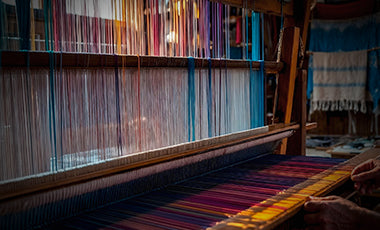
The law is simpler than you might expect. Under the Handlooms (Reservation of Articles for Production) Act, 1985, "handloom" means any loom other than a powerloom, and a powerloom is one worked by power. So a handloom saree is woven on a loom operated by hand, not driven by electricity.
The Act also reserves certain articles for handlooms only. According to a Lok Sabha reply, these include sarees made of cotton or silk with extra warp or extra weft designs in the border, heading or body, including buttas. That is why a distinctive woven motif is a sign of a traditional handloom craft, though not proof by itself.
The three marks, side by side
|
|
Handloom Mark |
Silk Mark |
GI tag |
|
What it is about |
How the cloth was woven |
What the yarn is made of |
Where the product comes from |
|
Who is behind it |
Ministry of Textiles, implemented by the Textiles Committee |
Silk Mark Organisation of India, set up by the Central Silk Board |
Government of India's Geographical Indications registry |
|
What it tells you |
The product is certified as handloom under the scheme |
The textile is made of pure natural silk |
The weave is tied to a registered region or community |
|
What it does not tell you |
Whether the yarn is pure silk or cotton |
Whether the saree is handloom |
Whether this particular piece is authentic, unless it is from an authorised producer |
Each mark answers a different question. That is the single most useful thing to remember.
The Handloom Mark
The Handloom Mark Scheme was launched on 28 June 2006 to assure buyers about handloom products, as explained in a Lok Sabha answer. The Textiles Committee, a statutory body under the Ministry of Textiles, implements it.
There is also the India Handloom Brand, for higher-quality handloom products. According to official standard operating procedures, entities registered under the Handloom Mark are eligible to apply for it.
One thing is worth watching. In March 2026, the Ministry of Textiles notified the WTO about draft Handloom Mark Standards (Labelling and Display) Regulations, 2025. Law firm ELP reports that, once notified in the Official Gazette, they would make the Handloom Mark label mandatory for products marketed as "handloom". We have not confirmed whether they have been notified yet, so check the current status.
Until then, remember: not every genuine handloom saree carries a Handloom Mark. Small weavers may not have registered. The mark is a good sign when present, but its absence is not proof of fakery.
The Silk Mark
The Silk Mark was launched by the Central Silk Board in 2004 and certifies that a textile is made of pure natural silk. It is advisory in nature and not legally mandatory. Tags typically carry a numbered hologram, and the scheme offers testing at Silk Mark chapters if you have doubts.
Here is the part that surprises people: a Silk Mark does not prove handloom weaving. A power-loom saree can be pure silk and still carry the mark. Sellers like HMR Handlooms make the same point in their buyer guides: the mark confirms the fabric is silk, not that it was woven by hand.
The GI tag
A Geographical Indication (GI) marks goods with a specific geographic origin and qualities linked to that place. For handlooms, famous examples include Kanjivaram, Sambalpuri and Bhagalpur Silk. You can search the GI registry to see whether a weave is registered.
Some sellers point out that certain GI-tagged weaves come with an Authorised User certificate. That is worth asking for when the product page claims GI status. Not every saree sold under a GI name is automatically authorised.
Physical checks you can do yourself
Marks help, but your hands and eyes still matter. Remember that these are indicators, not laboratory proof.
- Look for small irregularities. Hand-weaving often shows slight variations in thread spacing or motif alignment. Perfect, mirror-like uniformity can point to a machine.
- Turn the saree over. On a handloom piece, you may see tiny knots, floating threads or extra-weft ends at the back. A back that looks as neat as the front, with no trace of the motif's construction, deserves a second look.
- Check the selvedge. Some sellers say a handloom saree has a firm, strong selvedge, while machine-made ones can have stitched or glued edges.
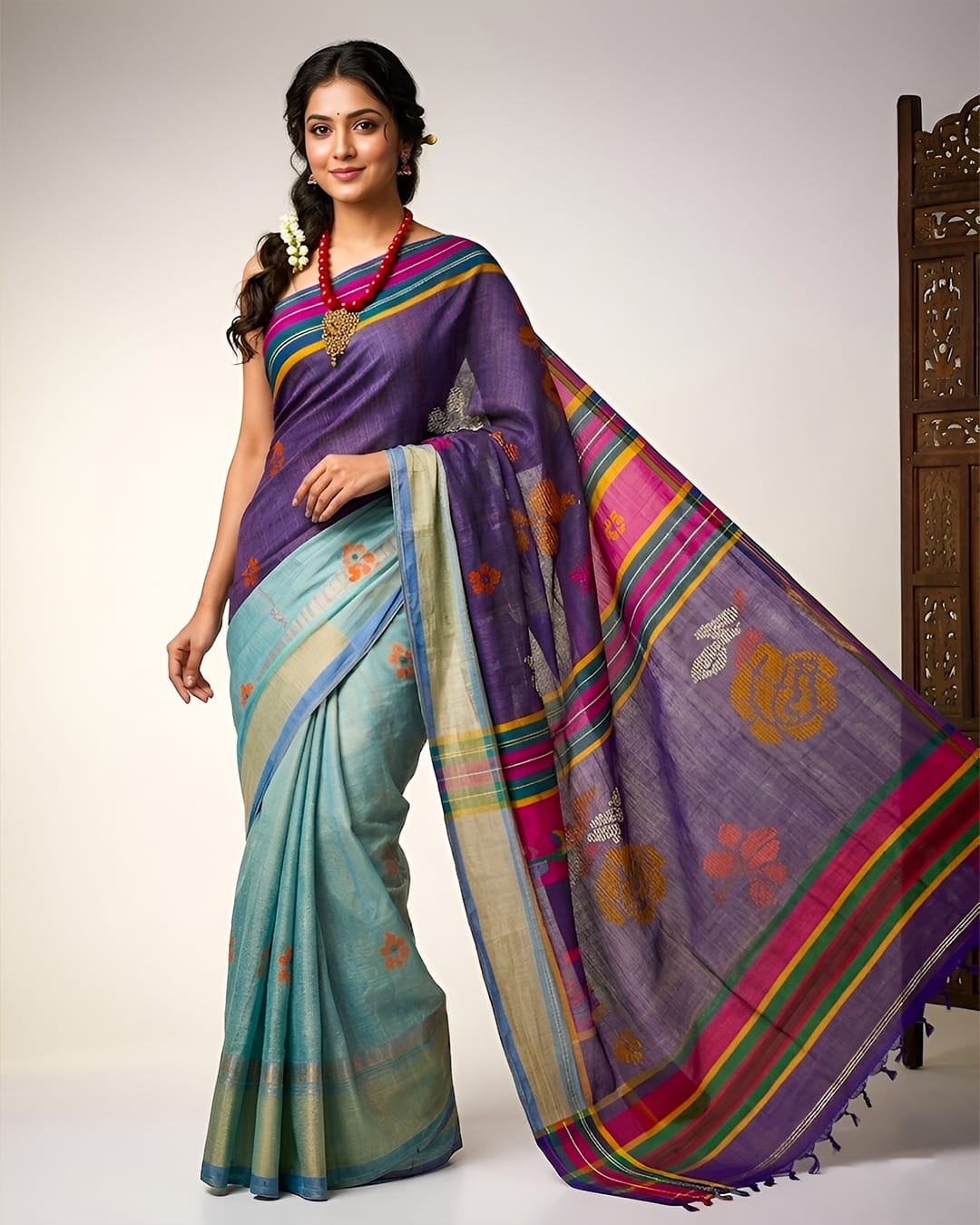
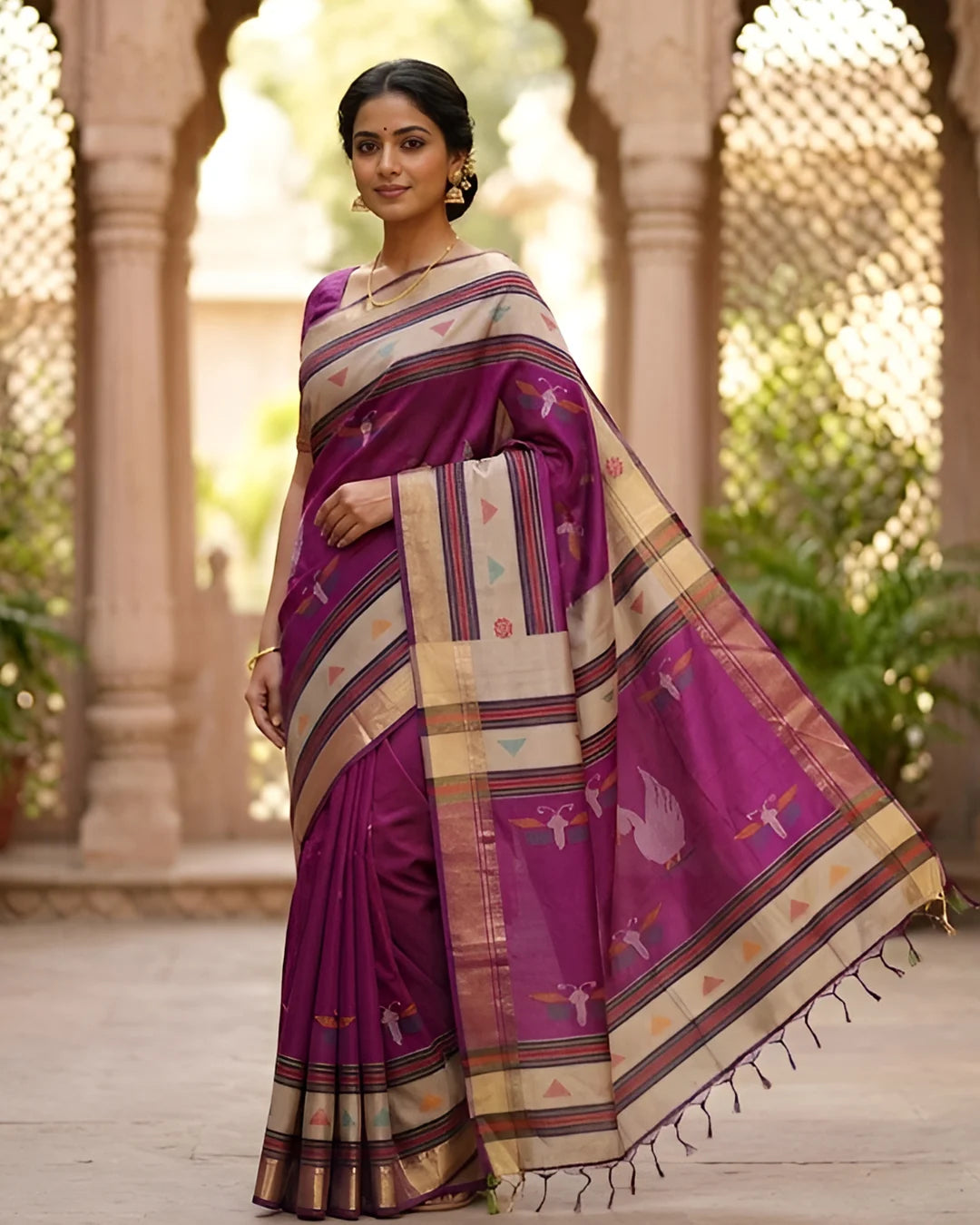
- Examine borders and motifs. Heavy zari borders, handwoven buttas and reversible pallus often show visible weaving effort.
- Feel the weight and texture. Handloom cotton tends to feel soft and slightly uneven. Real silk feels cool and smooth, with a lustre that shifts in the light, while tussar silk feels grainier.
-
Consider the price. Handloom takes days or weeks. A very low price for a "pure handloom silk saree" is a red flag.
About the burn test: you may read that burning a thread tells you if silk is real. It can work, but it damages the fabric and may affect your return rights. Do not cut or burn a saree you plan to keep or return.
Handloom cotton vs silk: does the checking change?
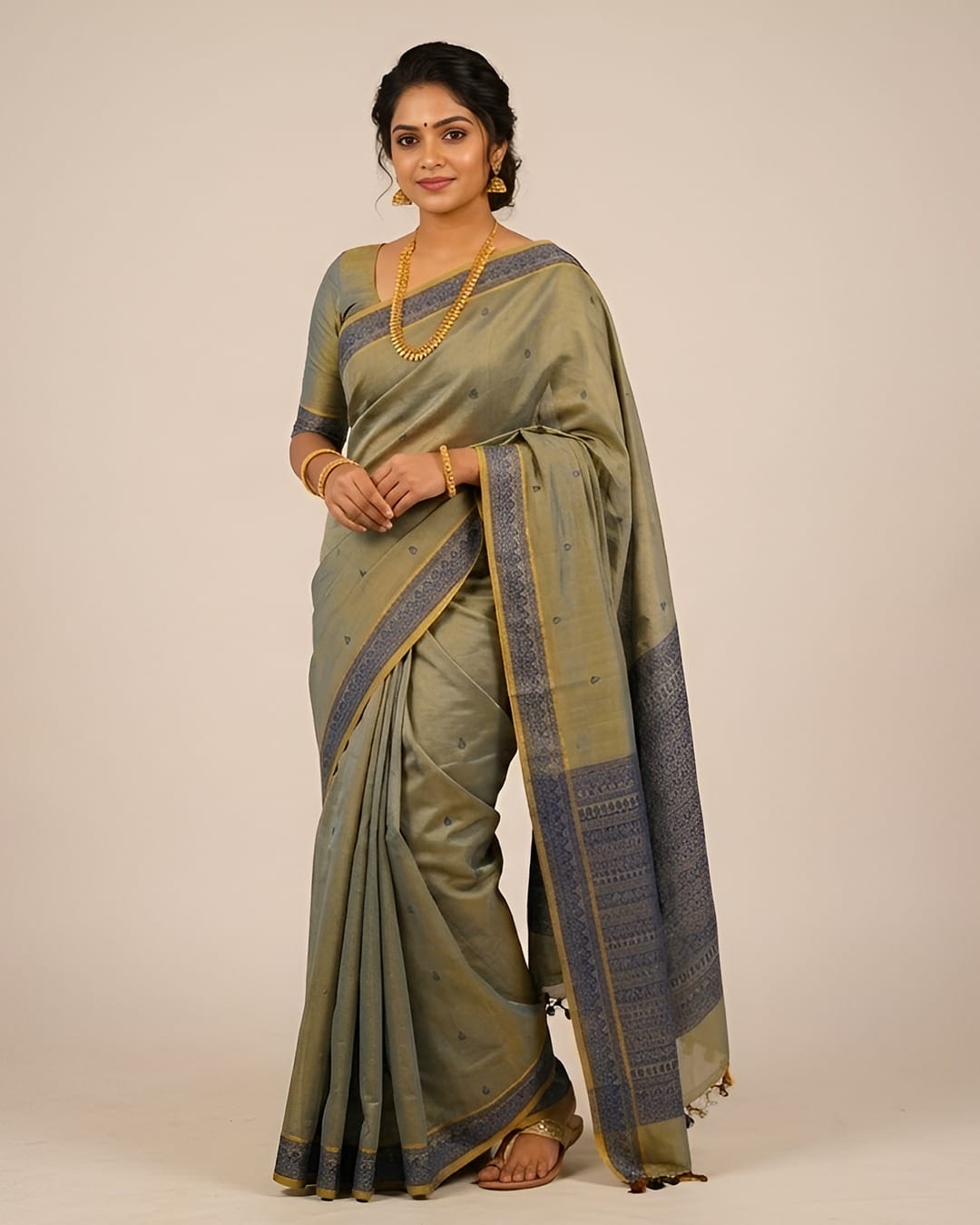
A little. For handloom cotton, the Handloom Mark and physical checks matter most, since the Silk Mark does not apply. Look for a soft, slightly uneven hand and a visible weave. For handloom silk, use both the Handloom Mark and the Silk Mark, and add the GI question if the saree is sold under a regional name. See the difference for yourself in our pure cotton handloom sarees and pure silk handloom sarees.
Questions to ask when you buy online
You cannot touch the saree, so ask:
- Which marks does this saree carry, and can I see a photo of the tag?
- What is the yarn, and which weave and region is it from?
- Can you show the reverse side or do a quick video call?
- Who is the weaver or cluster behind it?
- What is the return policy for handloom irregularities?
A confident seller answers these without fuss. At House of Sodesii, we show 4-5 pictures of each saree and are happy to do a video call. Some of our sarees carry GI, Silk Mark or Handloom Mark details, which appear on the product page. You can browse the full handloom saree collection or read our FAQ.
The simple way to remember it
- Handloom Mark answers: was it woven by hand?
- Silk Mark answers: is the silk real?
-
GI tag answers: does the weave belong to this place?
No single logo answers all three. A trustworthy seller will explain which ones apply to the saree in front of you.
FAQ
How do I identify a genuine handloom saree?
Check for the Handloom Mark, look for small natural irregularities in the weave, inspect the reverse side and selvedge, and ask the seller for yarn, weave and origin details. No single check is conclusive.
What is the difference between the Handloom Mark and the Silk Mark?
The Handloom Mark relates to how the cloth is woven (by hand). The Silk Mark certifies pure natural silk. A saree can have one without the other.
Does a Silk Mark prove a saree is handloom?
No. The Silk Mark confirms the fabric is pure silk, not that it was woven on a handloom.
Does every handloom saree have a Handloom Mark?
No. Many genuine handloom sarees do not carry one, especially from small weavers. The mark is a helpful sign when present.
What does a GI tag mean on a saree?
It indicates a weave tied to a registered geographical region. Ask whether the specific saree comes from an authorised producer.
How is handloom different from power loom?
Handloom is woven on a loom operated by hand. A power loom is driven by electricity, which makes cloth faster and more uniform.
Is the burn test reliable for checking silk?
It can indicate natural versus synthetic fibres, but it damages the saree and may void returns. Prefer certification and seller transparency.