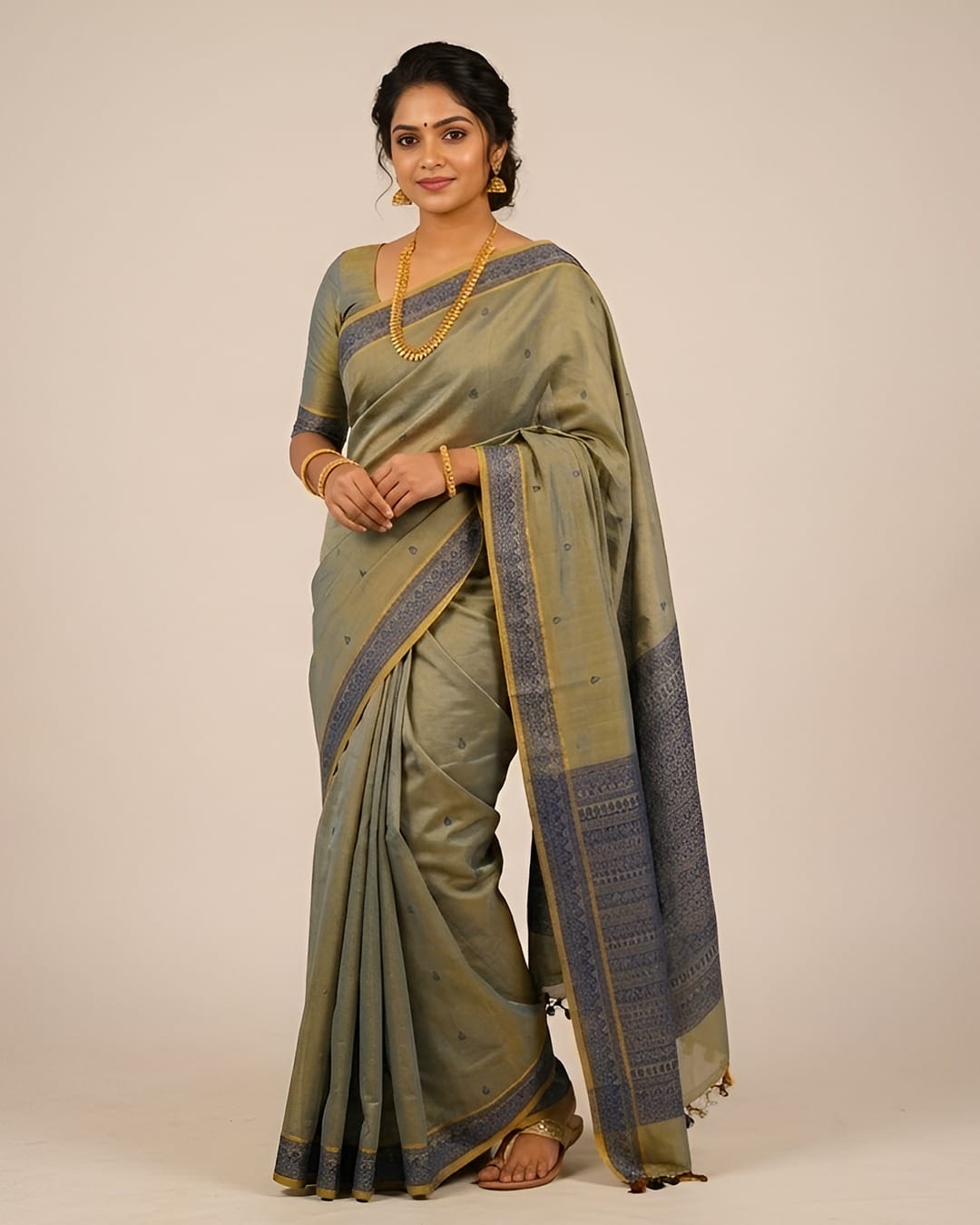
A friend once told me she was torn between two sarees for a cousin's wedding. One was a glossy, deep-maroon silk that seemed to glow. The other was a soft, golden tussar with a simple border. "Which one is soft silk?" she asked.
The honest answer surprised her: both.
That is the heart of the handloom soft silk sarees question. In shops, "soft silk" often quietly means mulberry silk, the smooth, glossy kind. But tussar is also a natural silk. The real choice is not pure versus not pure. It is between two different characters of silk. Let us look at each so you can choose well.
First, clear up the term "soft silk"
"Soft silk" means the yarn is natural silk, not polyester, viscose or other blends. Under that definition, both mulberry silk and tussar silk qualify, along with eri and muga.
The difference lies in the silkworm and how it lives:
- Mulberry silk comes from Bombyx mori, a silkworm that feeds only on mulberry leaves and is fully domesticated and reared indoors (MoSPI sericulture chapter). Its smoothness, softness and natural lustre suit luxury fabrics.
- Tussar (tasar) silk comes mainly from Antheraea mylitta, a wild silkworm that feeds on trees such as Asan and Arjun, reared in the open (Central Silk Board). Government statistics classify it as vanya, or non-mulberry, silk.
How they compare
|
|
Mulberry ("soft silk") handloom saree |
Tussar silk handloom saree |
|
Source |
Domesticated silkworm on mulberry leaves |
Wild silkworm on forest trees |
|
Texture |
Smooth and soft |
Slightly textured, grainy |
|
Sheen |
Glossy, rich lustre |
Soft, matte, golden glow |
|
Drape |
Flowing, fluid |
A little more structure and body |
|
Typical weaves |
Katan silk Banarasi, Kanjivaram and others |
Bhagalpuri, Banarasi tussar, hand-painted and block-printed tussar |
|
Typical price |
Generally higher |
Generally lower, though fine pieces can still be costly |
|
Care |
Dry-clean or gentle hand wash |
Dry-clean, gentle handling |
The sheen, texture and drape rows reflect how weaving houses describe them. Price is a general pattern, not a rule. A heavily woven tussar can cost more than a plain mulberry piece, so always judge the individual saree.
One more point from reference sources: tussar fibres are shorter than mulberry fibres, which is why they are often described as less durable (Tussar silk overview). This is a reason to handle tussar with care, not a reason to avoid it.
When to choose a mulberry (katan-style) silk saree
Choose it if:
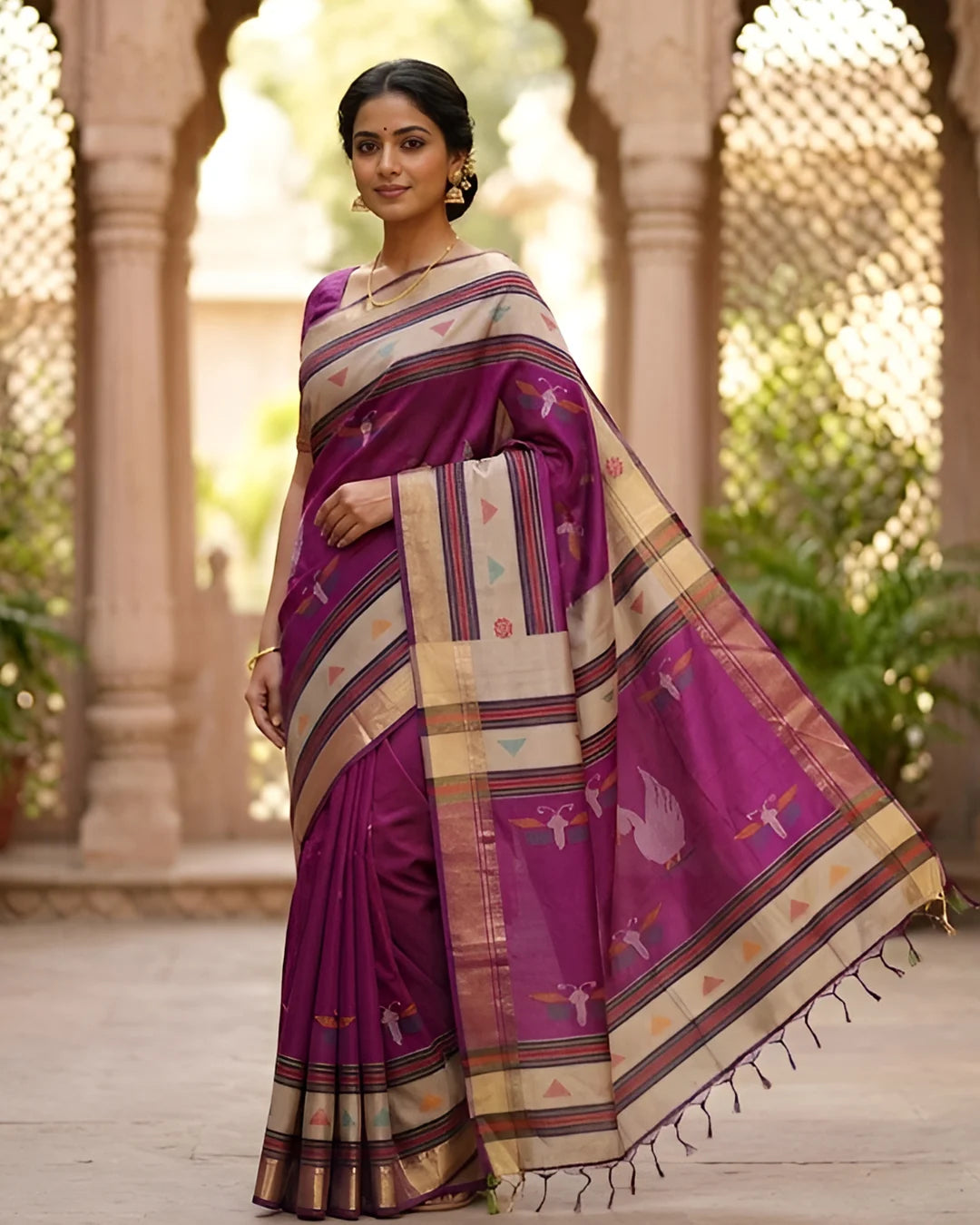
- You are attending or hosting a wedding or major ceremony and want a rich, glowing look.
- You love heavy zari, brocade and deep jewel colours.
- You want a fluid, flowing drape.
- You see the saree as an heirloom you may pass on.
Banarasi katan sarees are a classic example. Explore the range in our katan silk sarees and Banarasi sarees.
When to choose a tussar saree
Choose it if:
- You want a festive but understated look.
- You will wear it for day events, summer festivals, work or travel.
- You love earthy colours, hand-painted or block-printed designs.
- You prefer a matte finish to a high shine.
Many women find tussar a lighter, more wearable silk for everyday celebrations. See our handloom tussar silk sarees, and read our Bhagalpuri tussar guide for the story behind the weave.
A simple decision guide
|
If your day looks like... |
Start with... |
|
A grand wedding in winter |
Mulberry or katan silk with zari |
|
A daytime festival or puja |
Tussar with a contrast border |
|
Office with a long commute |
Tussar or a silk cotton |
|
A summer family lunch |
Light tussar or a softer silk |
|
A gift for someone special |
Whichever suits her taste; ask if she prefers shine or earthy |
If you are not sure, think about how you want to feel. Glowing and regal? Choose mulberry. Natural and relaxed? Choose tussar.
Colour and design: what each silk does best
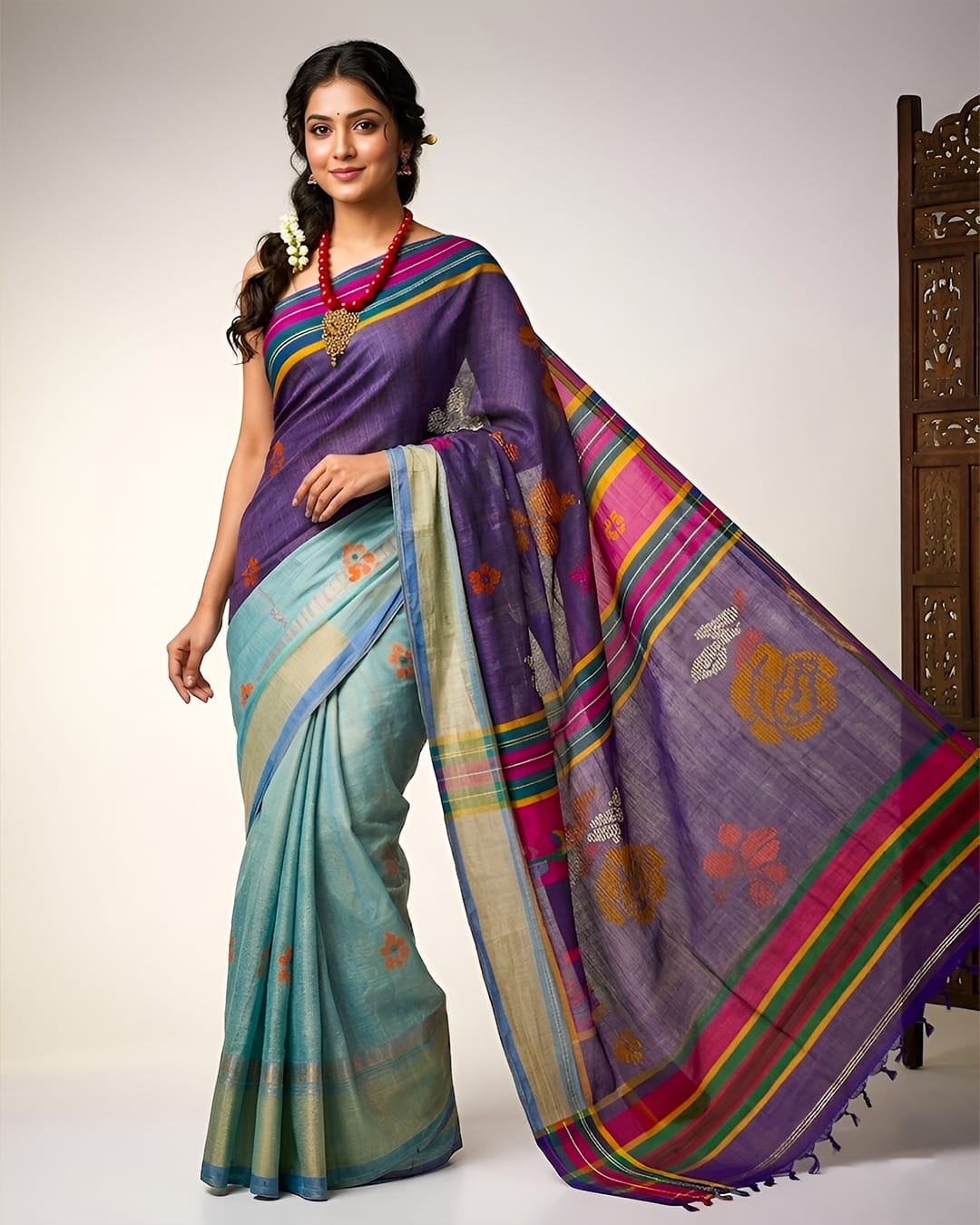
Mulberry silk takes dye deeply, so it is the natural home of rich jewel tones, deep maroons and heavy brocade. Tussar starts from a warm, golden base, which makes it lovely in earthy shades and a good canvas for hand-painted, block-printed and embroidered work. If you love a bright colour, check the listing photos in daylight, since natural tussar will always add a warm undertone.
Three common mistakes when buying silk online
1. Judging quality by shine.
High gloss looks rich in a photo, but it is not proof of quality. Shine alone cannot separate mulberry silk from a polyester blend, and a glossy "tussar" is a warning sign, because real tussar is matte.
2. Assuming "soft silk" means "handloom".
It does not. soft silk describes the yarn. Handloom describes how the cloth was woven. Always check both.
3. Ignoring care before buying.
Both silks need dry-cleaning and breathable storage. If you want a saree you can throw in a regular wash, a pure cotton or silk cotton piece may serve you better, and our silk by cotton collection is a good place to compare.
A fourth tip: look at the border. A well-woven border on either silk shows even, crisp edges, and zari that sits neatly on the cloth. If the border looks loose, puckered or uneven in the photos, ask for a closer view before you decide.
Handloom or not? Do not forget this check
Both types can be woven on a handloom or a power loom, and both can be imitated with synthetic yarn. Whatever silk you pick, run the same three checks:
- Yarn: Does the listing say "soft silk" or "100% tussar silk" clearly, not "silk look" or "tussar feel"?
- Loom: Does it say handloom? Is there a Handloom Mark or weaver detail?
- Proof: Does it show a Silk Mark where applicable? The Silk Mark confirms natural silk, not handloom.
Our guide on how to identify a genuine handloom saree explains each mark in detail.
Caring for either silk
- Dry-clean for the first wash and for any saree with zari, embroidery or paint.
- Store in muslin or cotton, not plastic.
- Refold now and then so creases do not set in the same place.
- Keep away from perfume and direct sun.
- Our FAQ has more care tips for silk sarees, including ironing on the reverse side on low heat.
So, which one should you buy?
If you can only own one silk saree, think about how often you will actually wear it. A glossy katan piece is spectacular, but it may come out only a few times a year. A tussar is quieter, but you may reach for it again and again.
Many women end up with both, for different moods. Browse our handloom soft silk sarees to compare them in one place, and message us if you want help choosing for a specific occasion.
FAQ
Is tussar silk soft silk?
Yes. Tussar is a natural silk produced by wild silkworms. It is a non-mulberry silk, while "soft silk" in shops often means smoother mulberry silk.
What is the difference between tussar silk and mulberry silk?
Mulberry silk comes from silkworms reared indoors on mulberry leaves and is smooth and glossy. Tussar comes from wild silkworms and is textured with a soft matte golden look.
Which is better for weddings, tussar or soft silk?
Mulberry or katan silk with zari is the traditional choice for weddings. Tussar with a rich border can also work well for guests and daytime ceremonies.
Is tussar silk cheaper than mulberry silk?
Generally, tussar is priced lower, but fine, heavily woven or hand-painted tussar can be expensive. Judge each saree on its own.
Is tussar silk durable?
Tussar fibres are shorter than mulberry fibres, so it benefits from gentle handling. With proper care, a tussar saree can last for years.
Can a handloom soft silk saree be a power loom saree?
Yes. "soft silk" describes the yarn, and "handloom" describes the weaving method. Check both on the product page.
How should I store a silk saree?
Wrap it in muslin or cotton, keep it in a cool, dry place away from direct sunlight, and refold it occasionally to avoid permanent creases.